

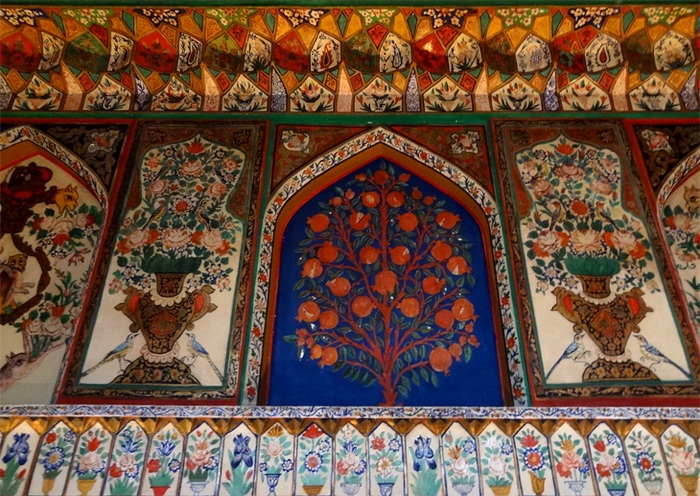

Pomegranate tree – Symbol of life
Historical Context
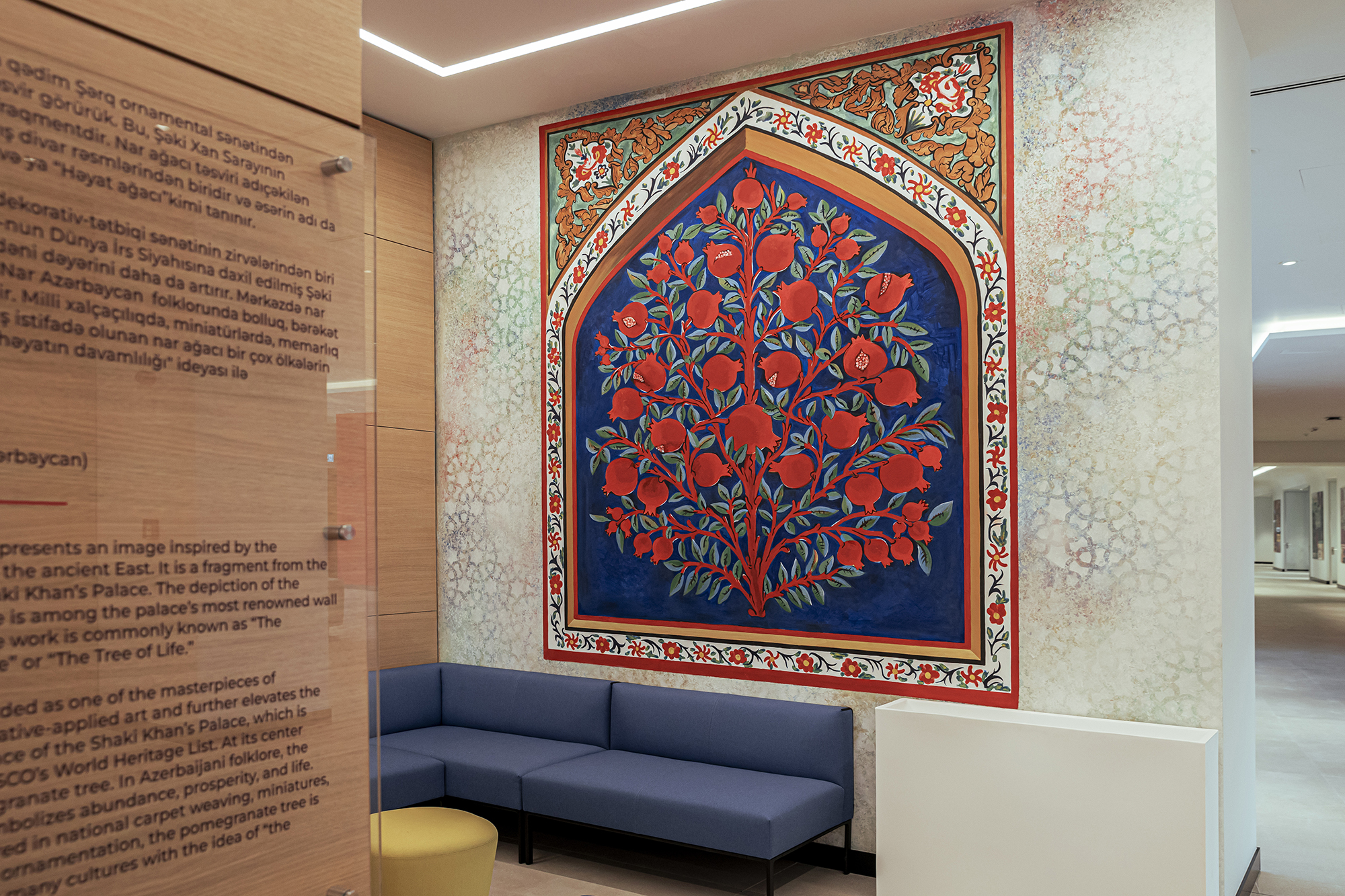
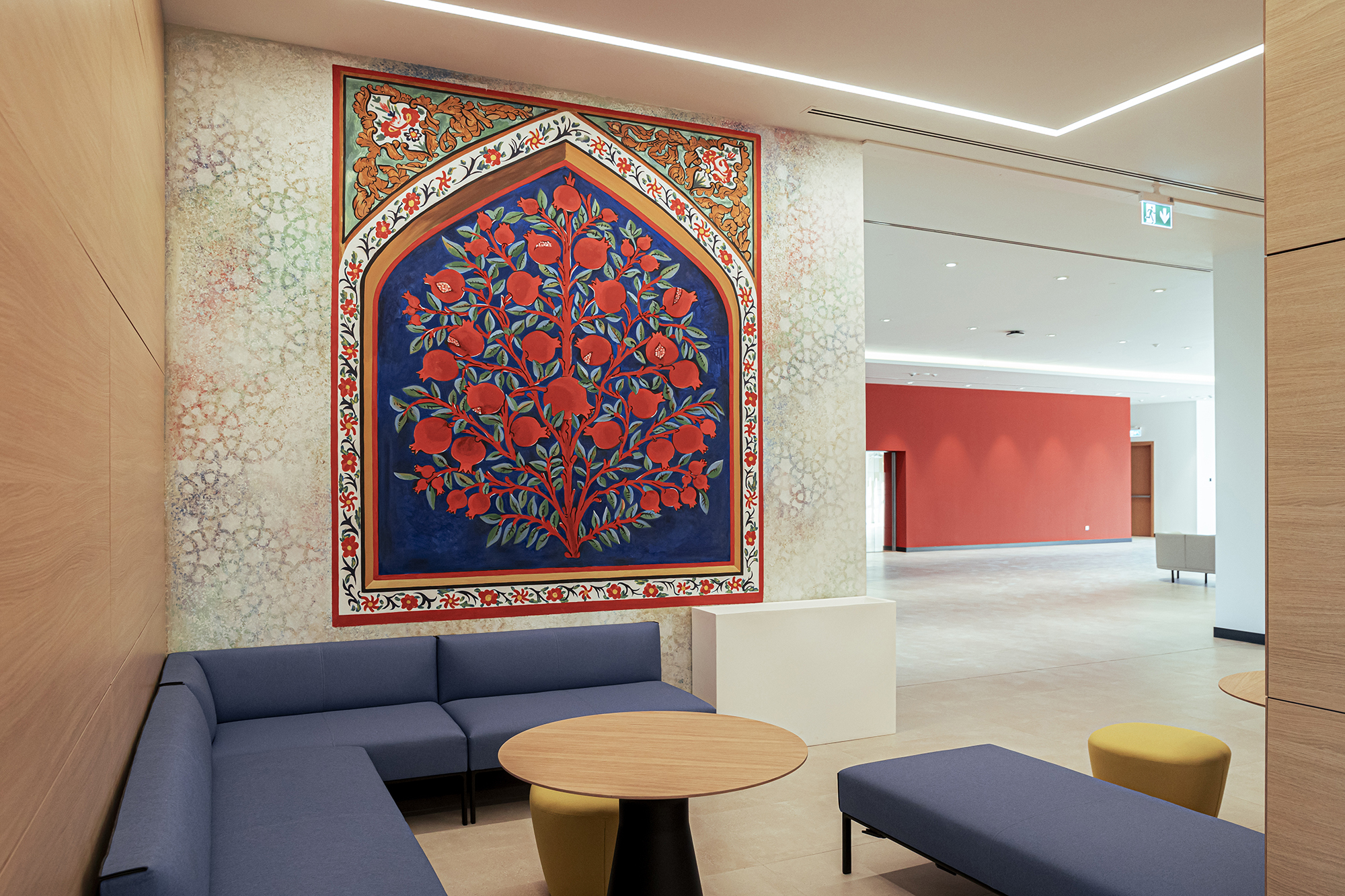
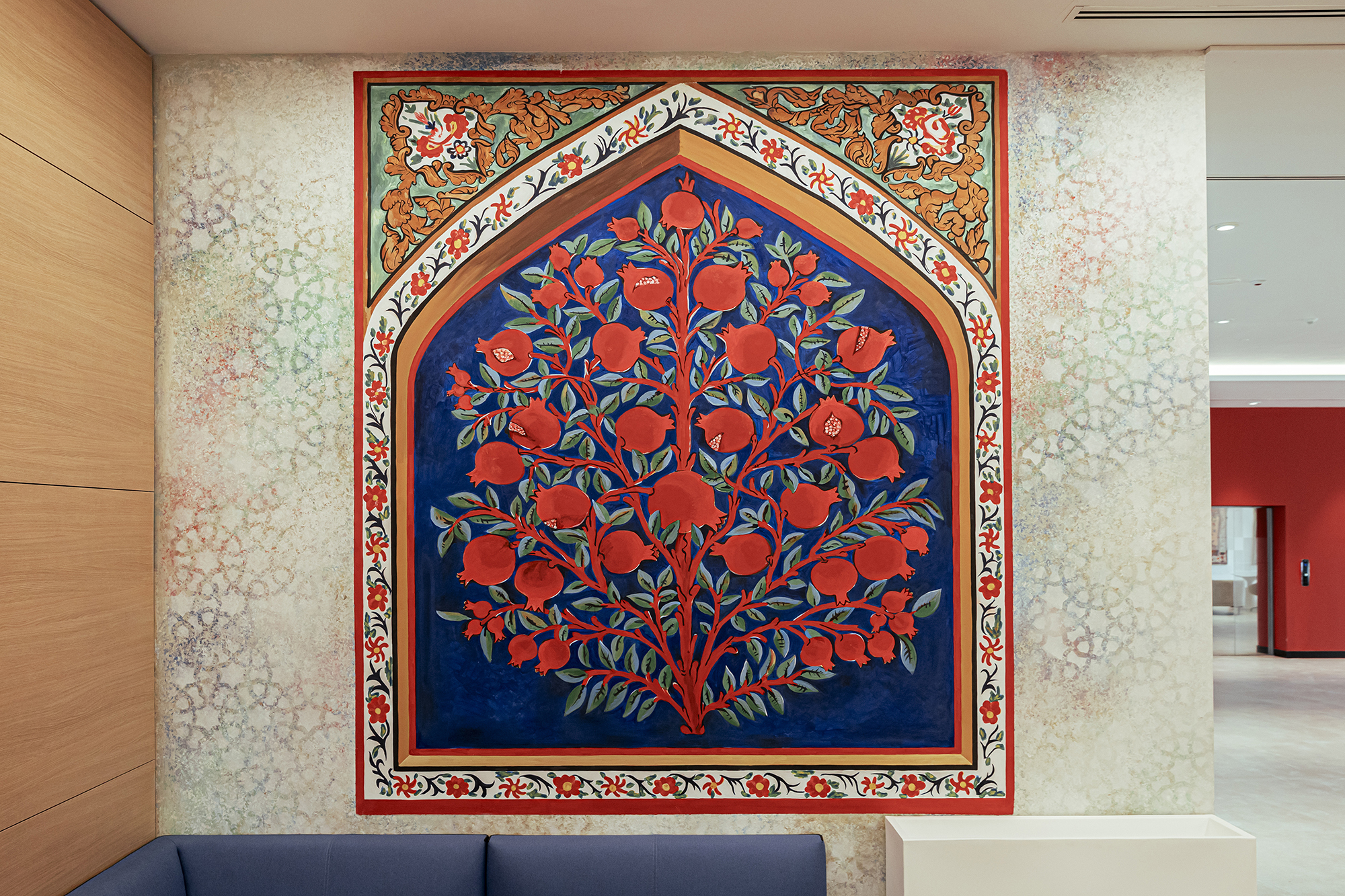
At the center of the composition stands the pomegranate tree. In Azerbaijani folklore, the pomegranate symbolizes abundance, prosperity, and life itself. It has long been a revered motif in national carpets, miniatures, and architectural ornamentation. Across many cultures, the pomegranate tree represents the idea of the “continuity of life,” linking generations and civilizations through its timeless symbolism. The image draws from centuries of artistic and spiritual tradition, connecting the past with the enduring human desire for harmony and renewal.
Cultural/Artistic Inspiration
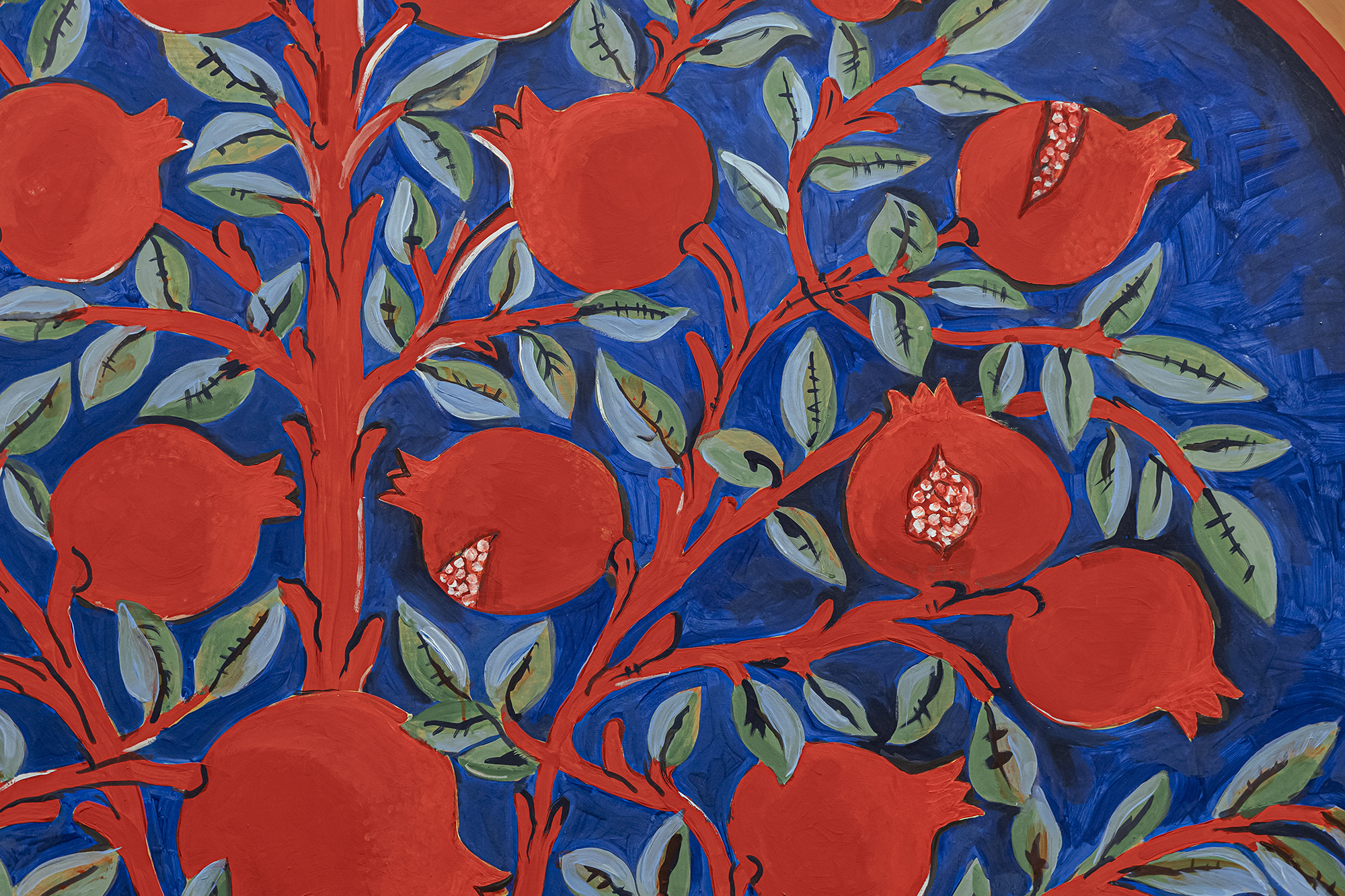
This artwork carries both decorative and philosophical meaning. It reflects humanity’s unity with nature and the universe, the continuity of life, and the deep roots of culture. The pomegranate tree at its heart is not merely a fragment of nature but a symbol of life, fertility, and eternity. Its red fruits glow like flames against a blue background, embodying the union of earth and sky. The roots stretch invisibly into the depths of the soil, while the branches reach toward the heavens—an allegory of human existence, the ascent of the soul, and the unity between the material and spiritual worlds. The pomegranate, holding hundreds of seeds within, represents countless lives, breaths, and destinies. Around this tree, humanity seems to gather—its branches symbolize diverse nations, cultures, and paths of life, while its roots point to a shared origin. The colors convey profound meaning: red stands for blood, life, love, and the eternal cycle; green leaves symbolize renewal, spring, and the rebirth of the soul; blue represents celestial infinity and closeness to God. Framed by an arch-shaped ornament resembling the doorway of a sacred temple, the composition invites the viewer to step inside and uncover the mystery of the pomegranate tree. The timeless message of the ancient masters resonates through it: “Life is a tree – our roots lie in the past, our branches in the present, and our fruits in future generations.”