14 Moon-faced beauties for 14 nights
Historical Context
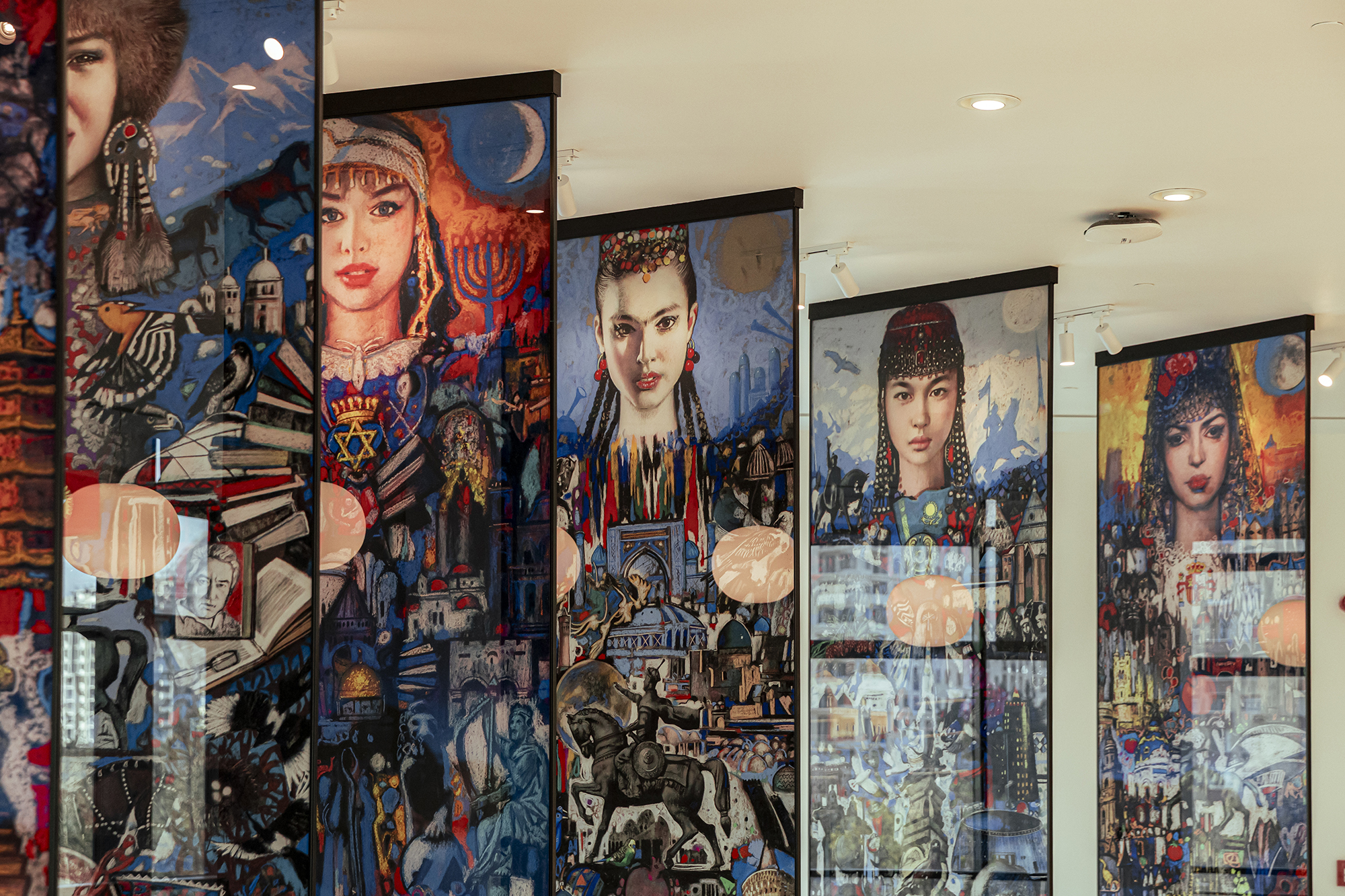
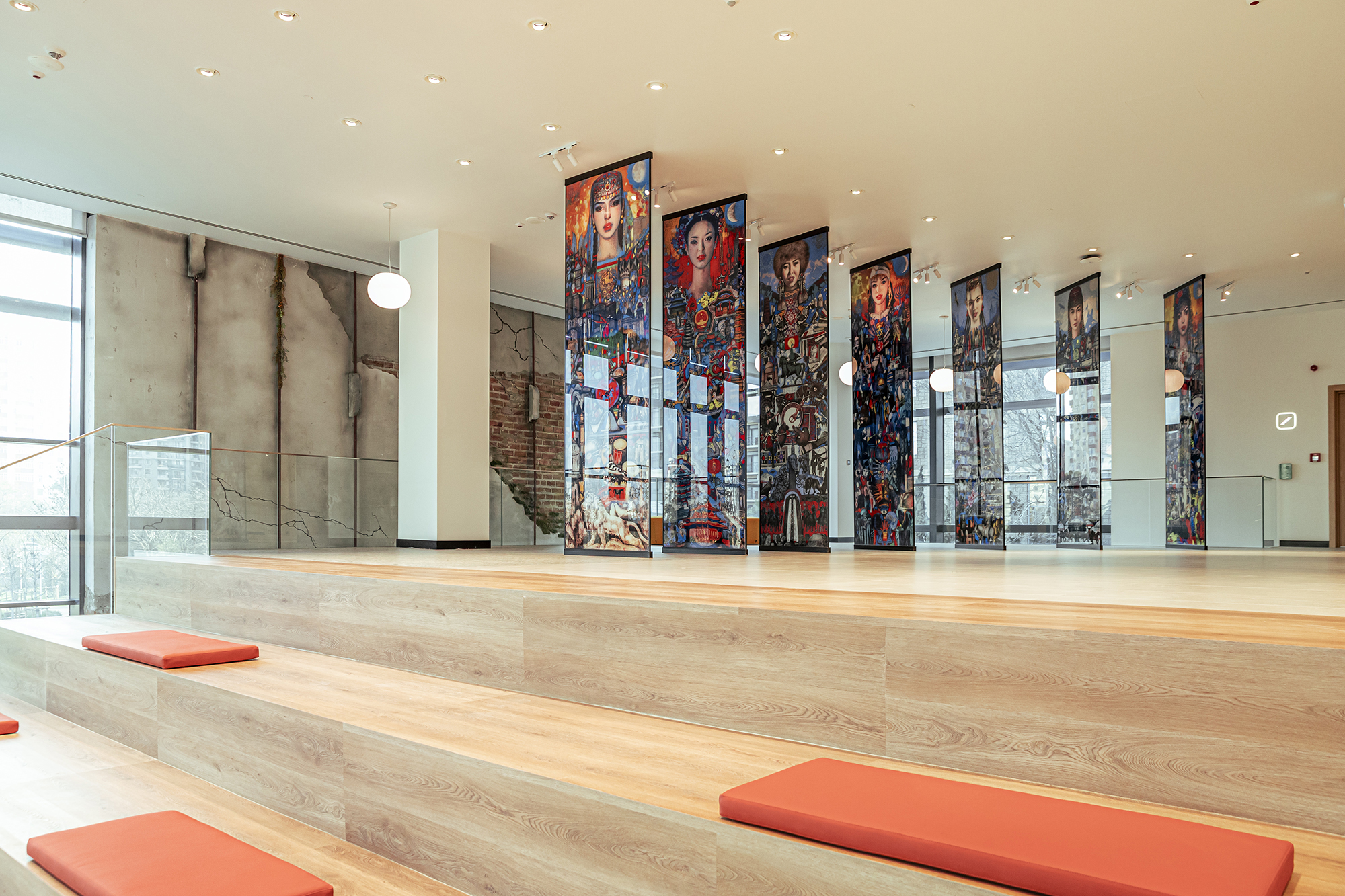
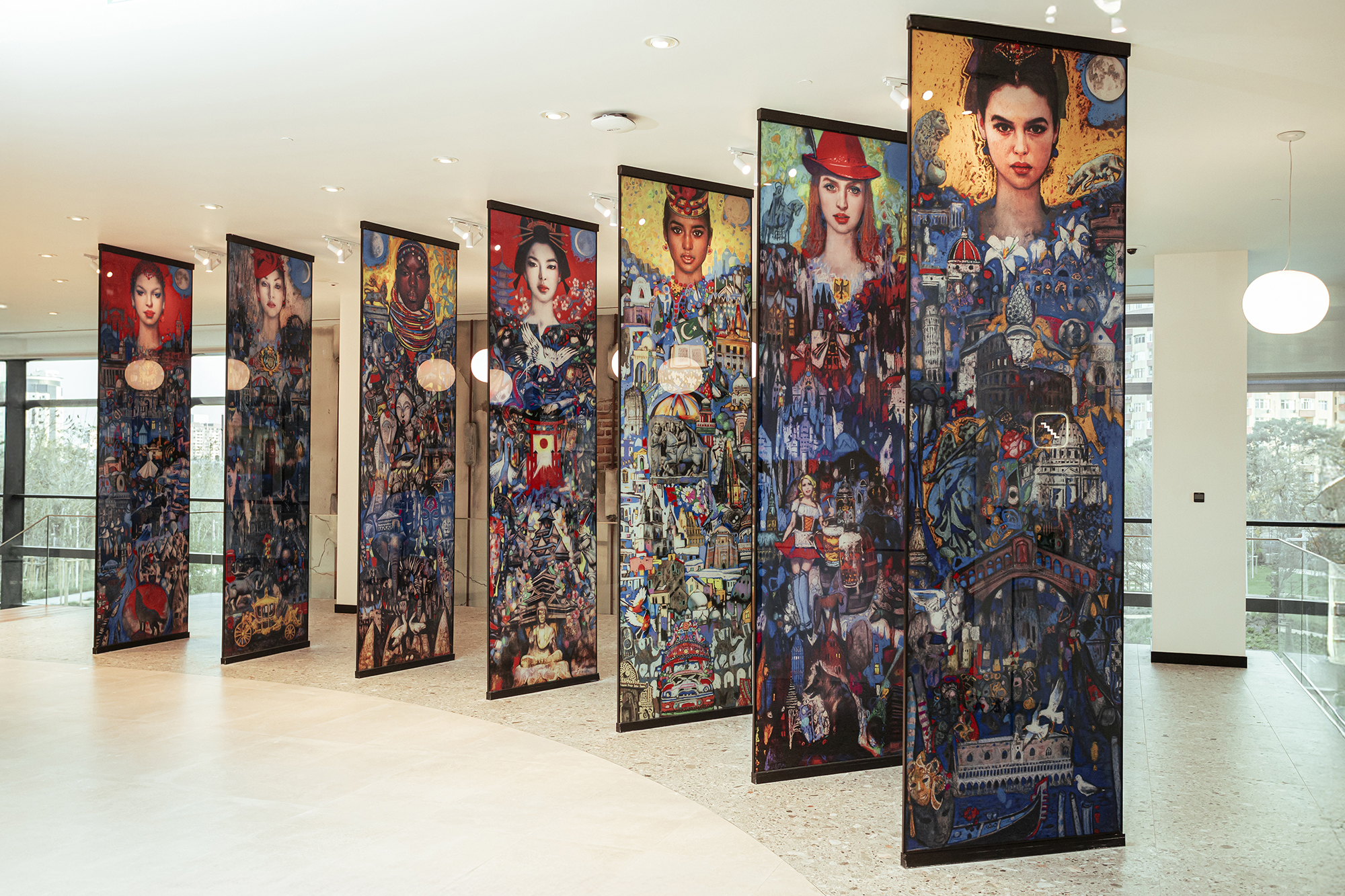
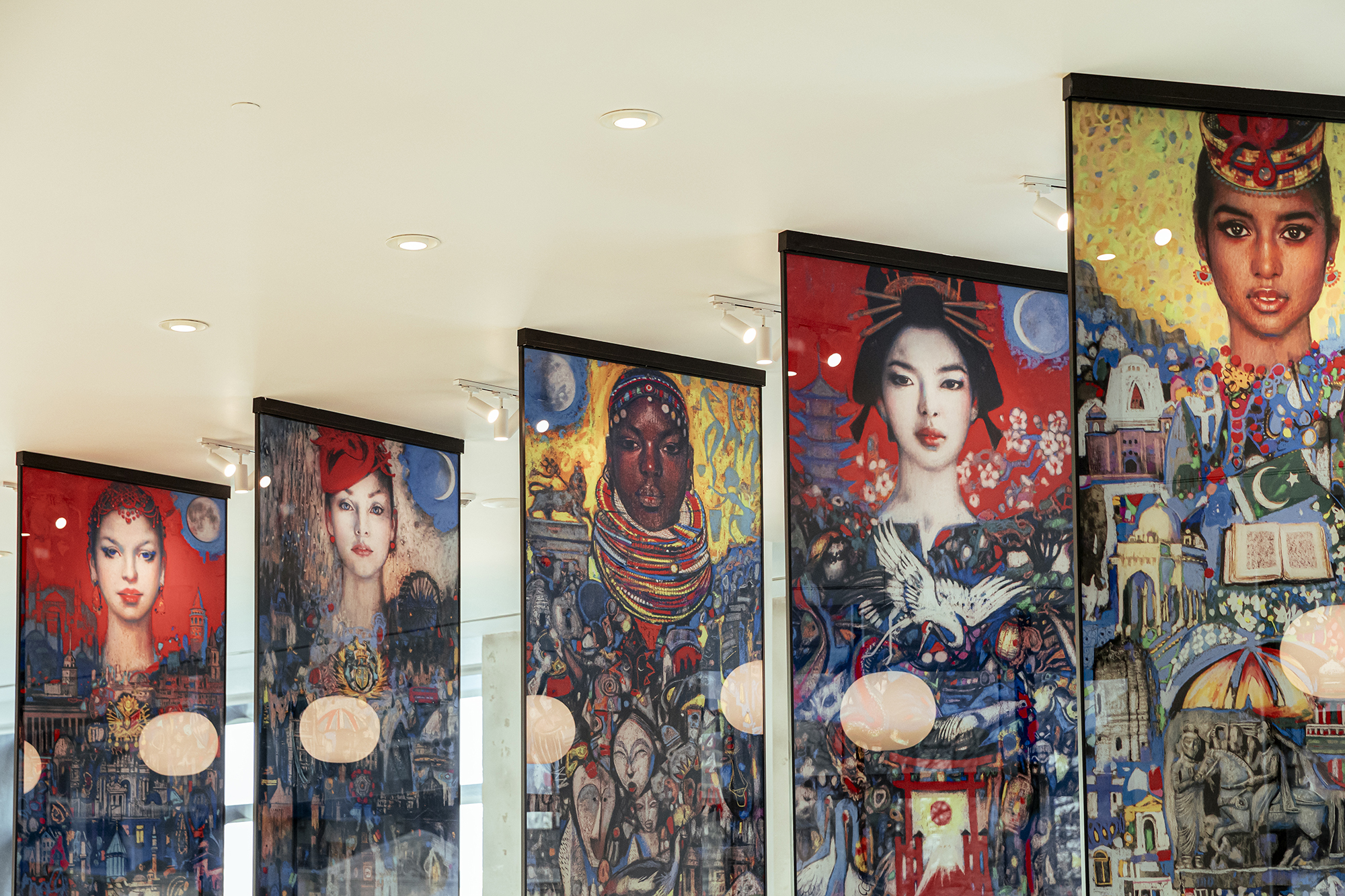
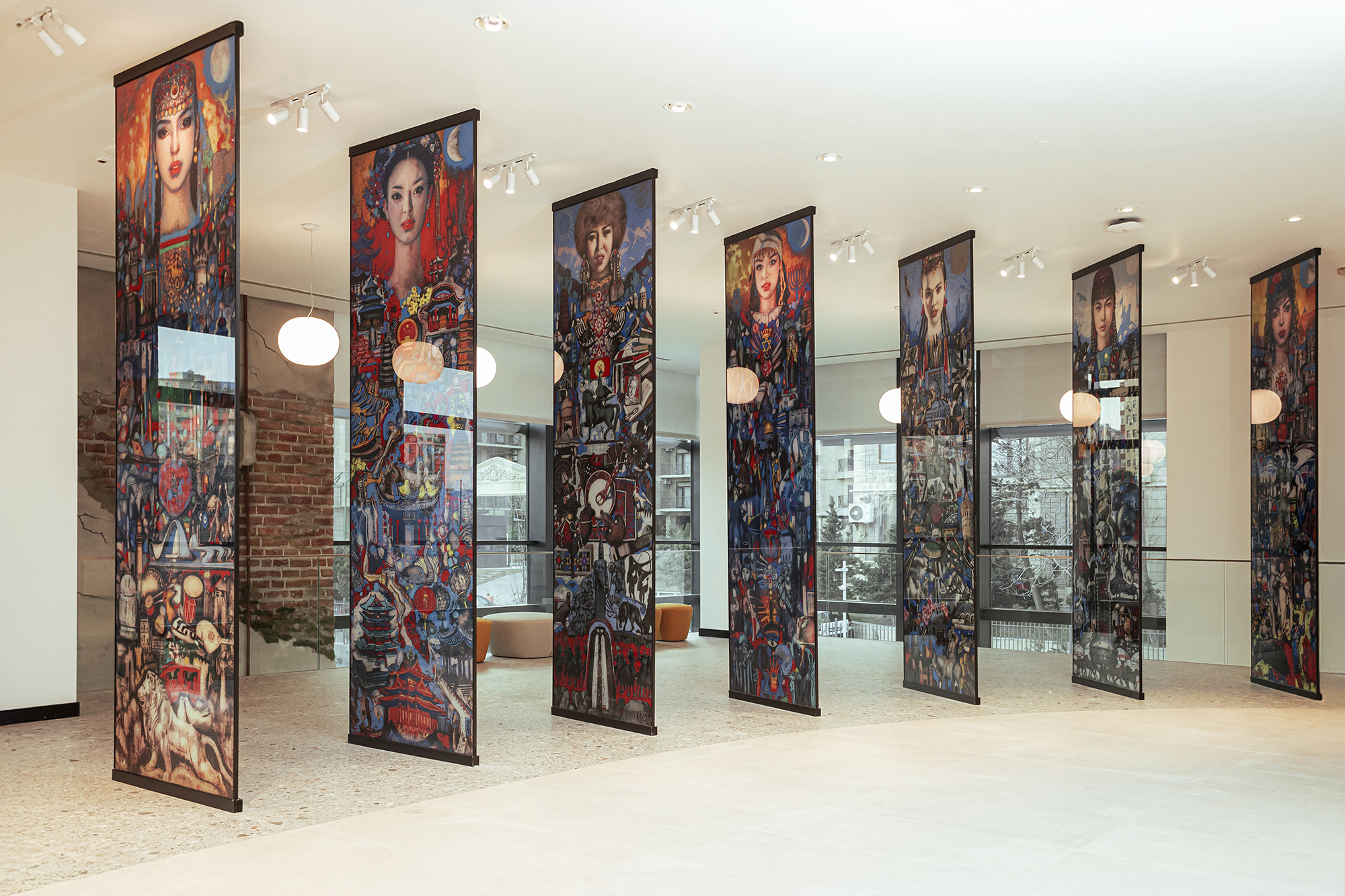
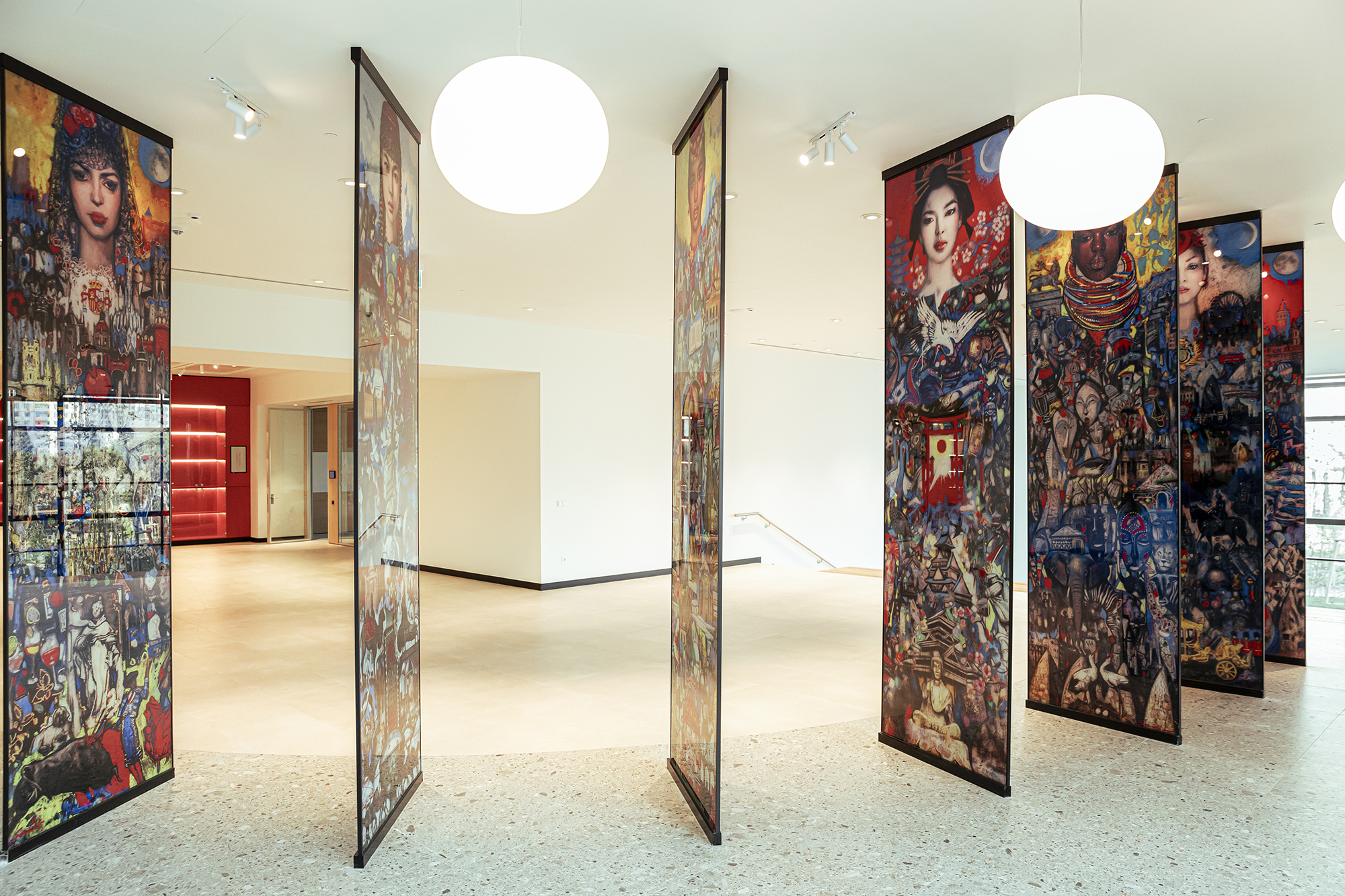
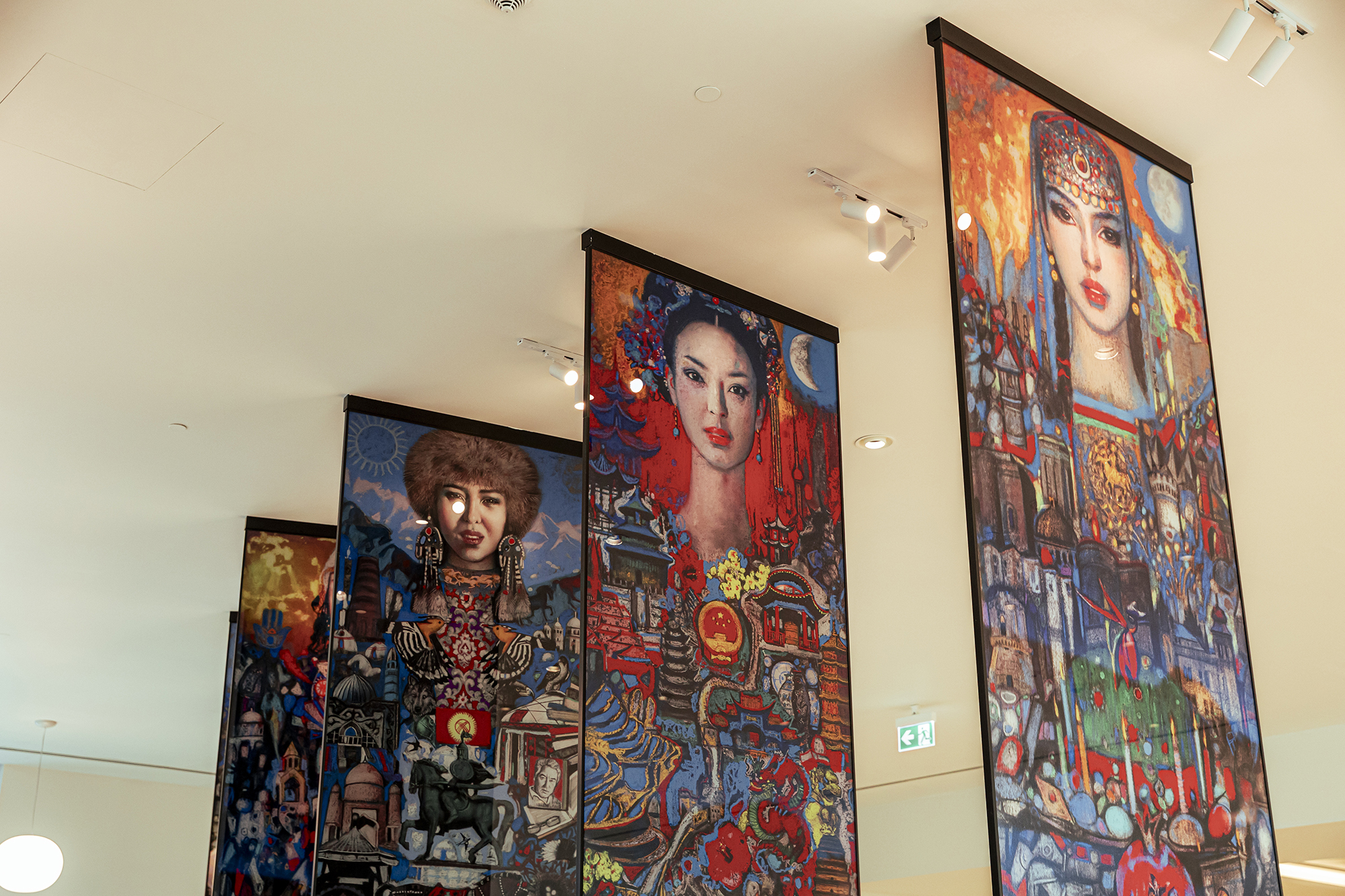
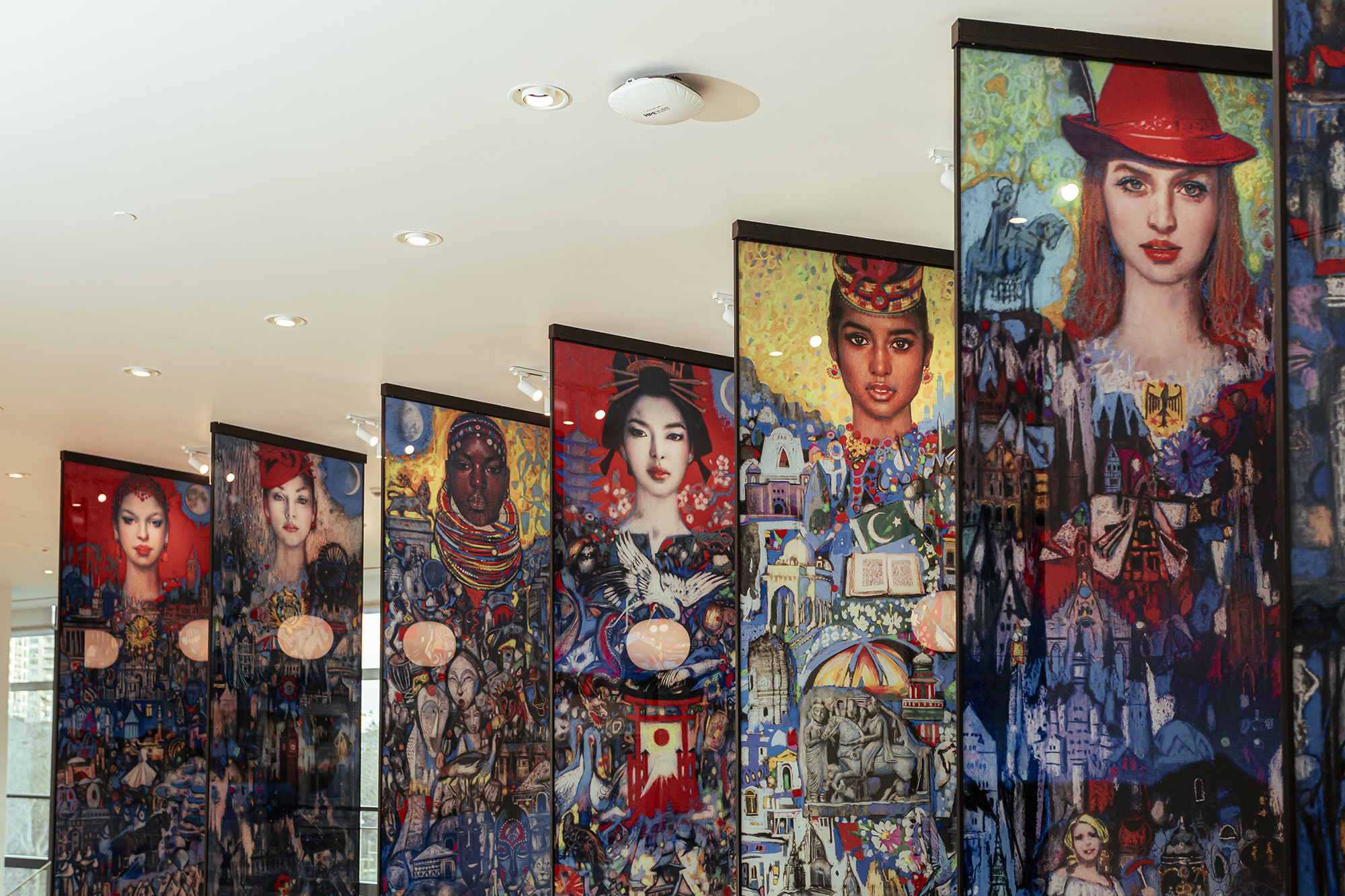
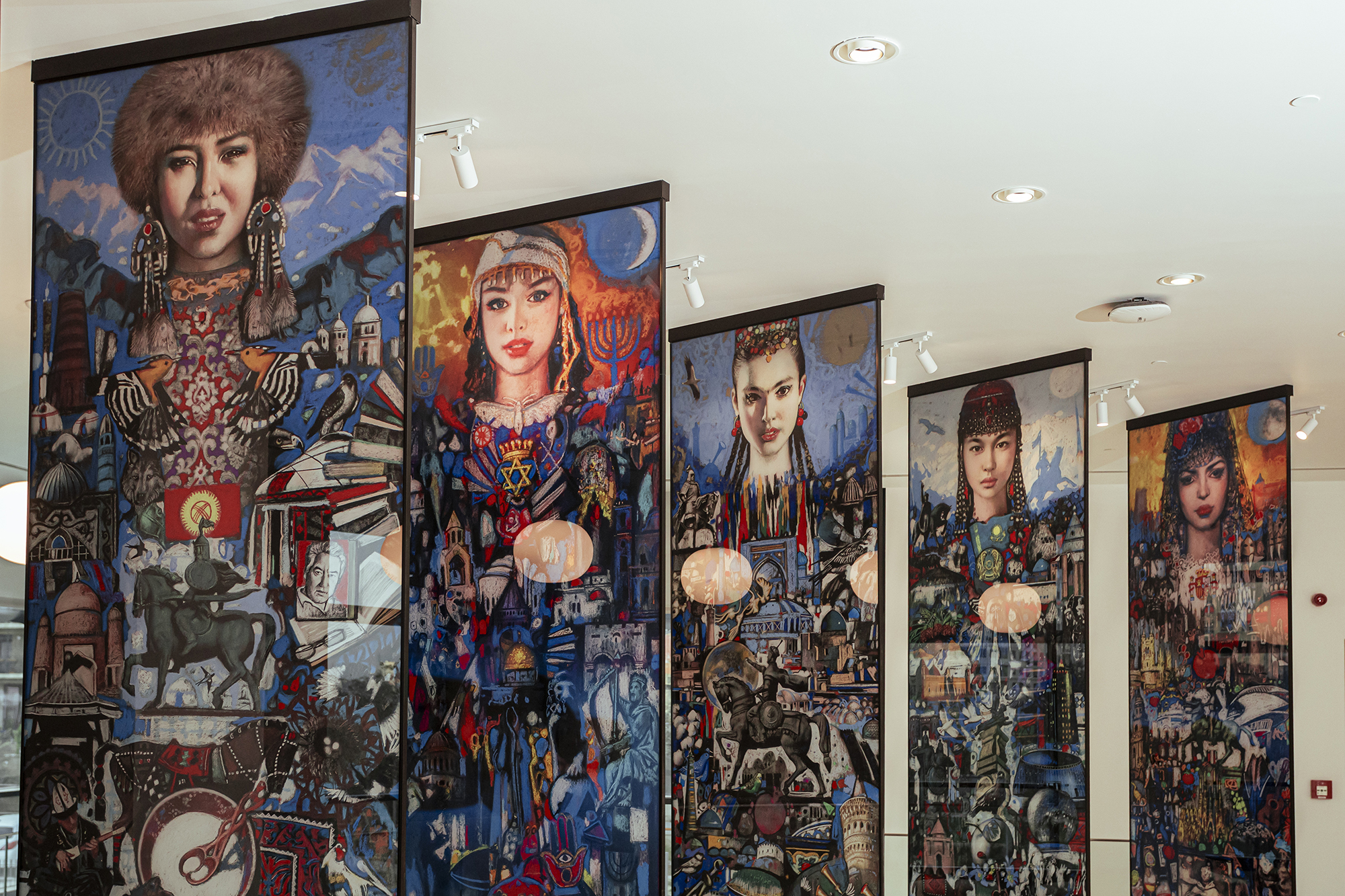
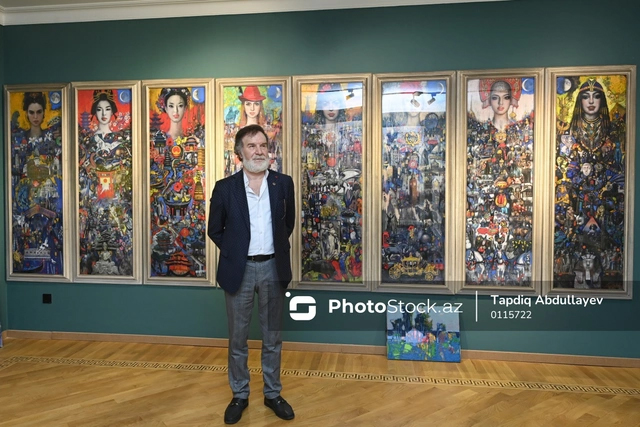
Throughout the centuries, Azerbaijani literature and art have consistently linked the moon with beauty, purity, and spiritual renewal. This composition brings that poetic metaphor to life in visual form, merging myth with contemporary artistic expression. Each woman depicted represents her nation’s cultural heritage — her gaze, attire, jewelry, and ornaments embody centuries of collective memory. In the background, architectural silhouettes, monuments, and symbolic landmarks further reflect the cultural identity of each people, forming what the artist terms “The Memory Map of a Nation.” These layered images transform the artwork into a rich archive of humanity’s shared aesthetic and historical consciousness.
Cultural/Artistic Inspiration
At the center of the composition is the harmony between the moon and the woman — two timeless symbols of nature’s cyclical balance. The moon depicted above each figure’s head is far more than a decorative element; it carries deep mythological and philosophical significance, symbolizing femininity, delicacy, emotional depth, and eternal renewal. Together, these women, bathed in the same moonlight, form a human mosaic — a celebration of both diversity and unity. Their rhythmic arrangement, ornamental backgrounds, and visual flow showcase Mammadov’s signature style: luminous colors, intricate detailing, and poetic expressiveness. The artist’s palette, with silvers, golds, and soft blues, evokes the purity of moonlight and the gentle radiance of the feminine spirit. Each figure is at once individual and universal — a portrait of her nation and a fragment of humanity’s shared soul. In this synthesis of tradition and modern symbolism, woman transcends individuality to embody collective identity, grace, and wisdom. “14 Moon-Faced Beauties for 14 Nights” conveys a timeless human message: “One light — shared beauty.” The moon unites these diverse figures under a single glow, reminding us that while nations may differ in language, attire, and symbols, they are bound by the same essence — the light of beauty and the harmony of existence. Each woman’s smile reflects her people’s hope, her gaze their journey, and her attire serves as a monument to cultural continuity. Through this poetic vision, the composition underscores a profound truth: borders may separate, and symbols may vary, yet humanity is united by a shared illumination of spirit — the eternal light of beauty that shines upon all.
Author
People’s Artist of Azerbaijan, Professor, and Member of the UNESCO Artists’ Union, Sakit Mammadov
Special Appreciation
Special thanks to Sakit Mammadov for granting permission to use reproductions of his artworks on glass surfaces.