Exposed flow
Historical Context
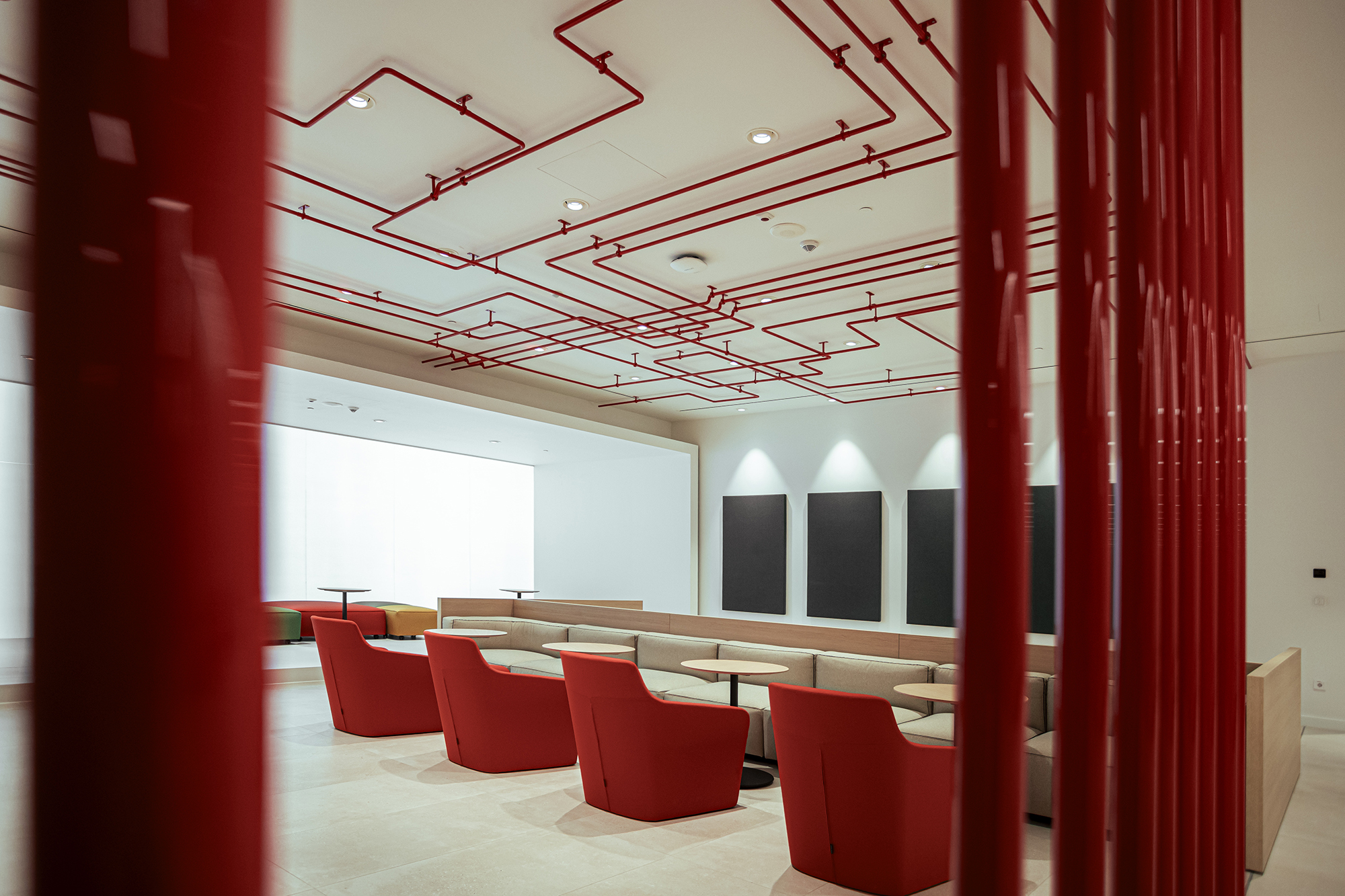
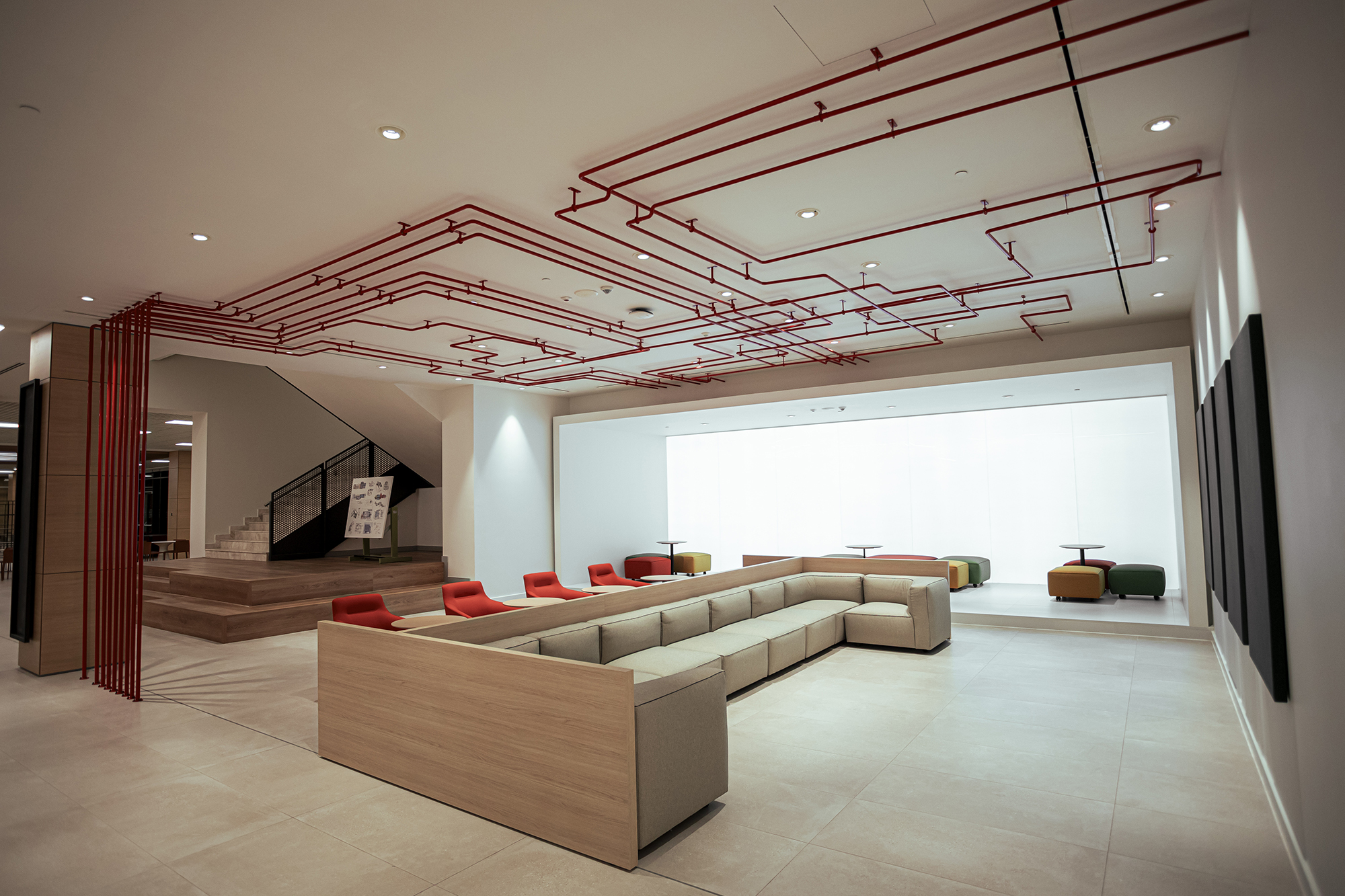
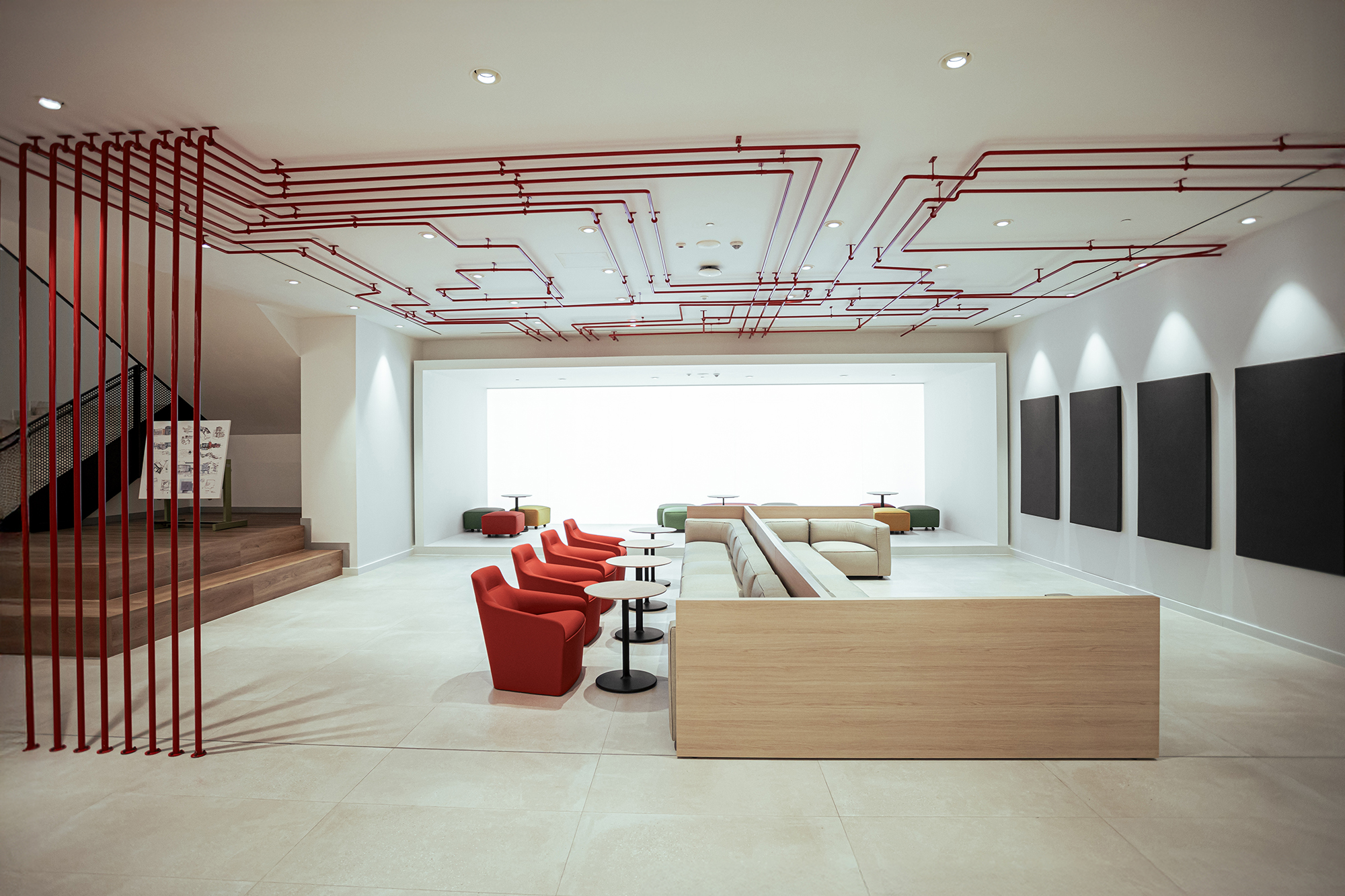
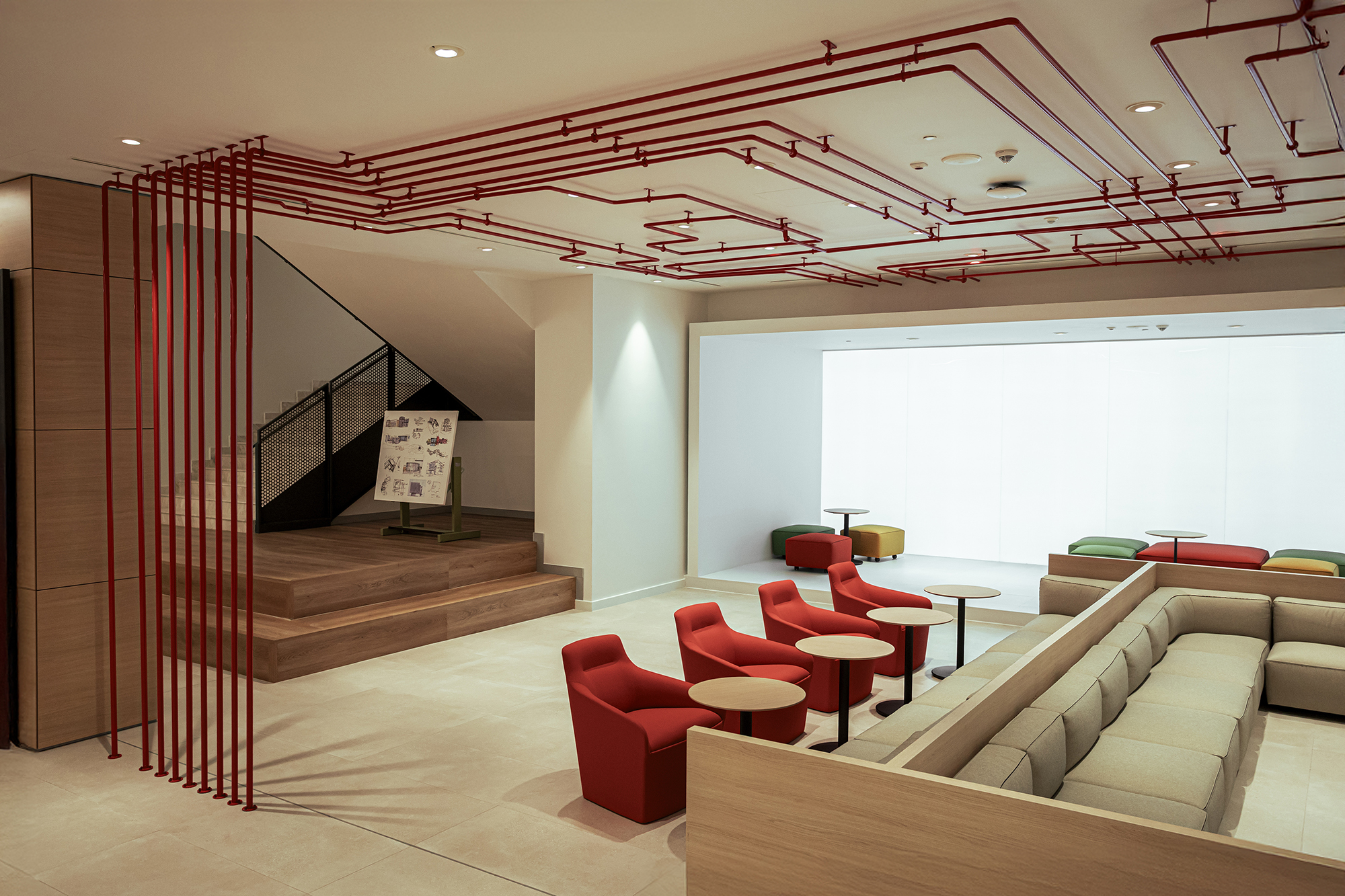
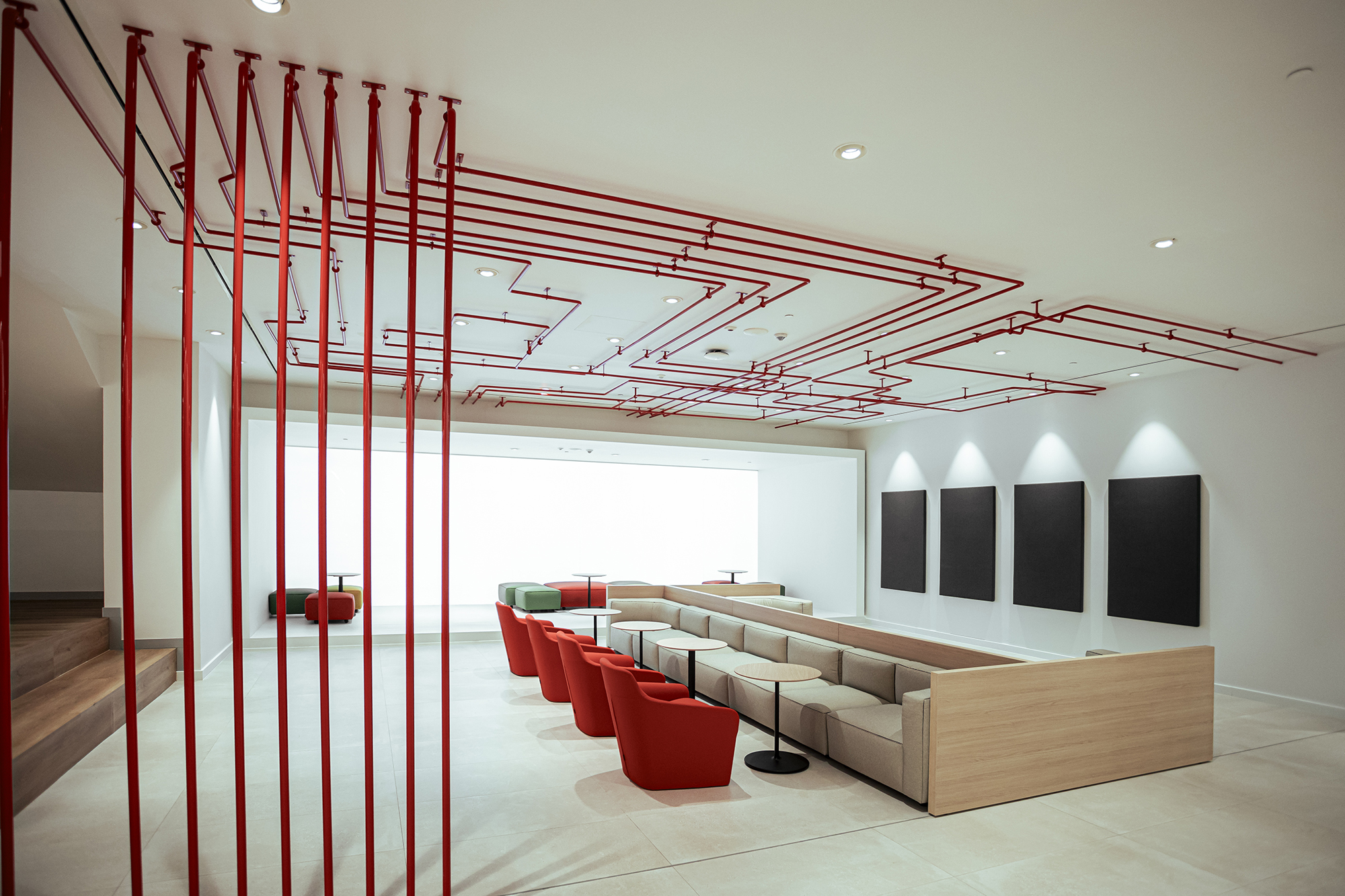
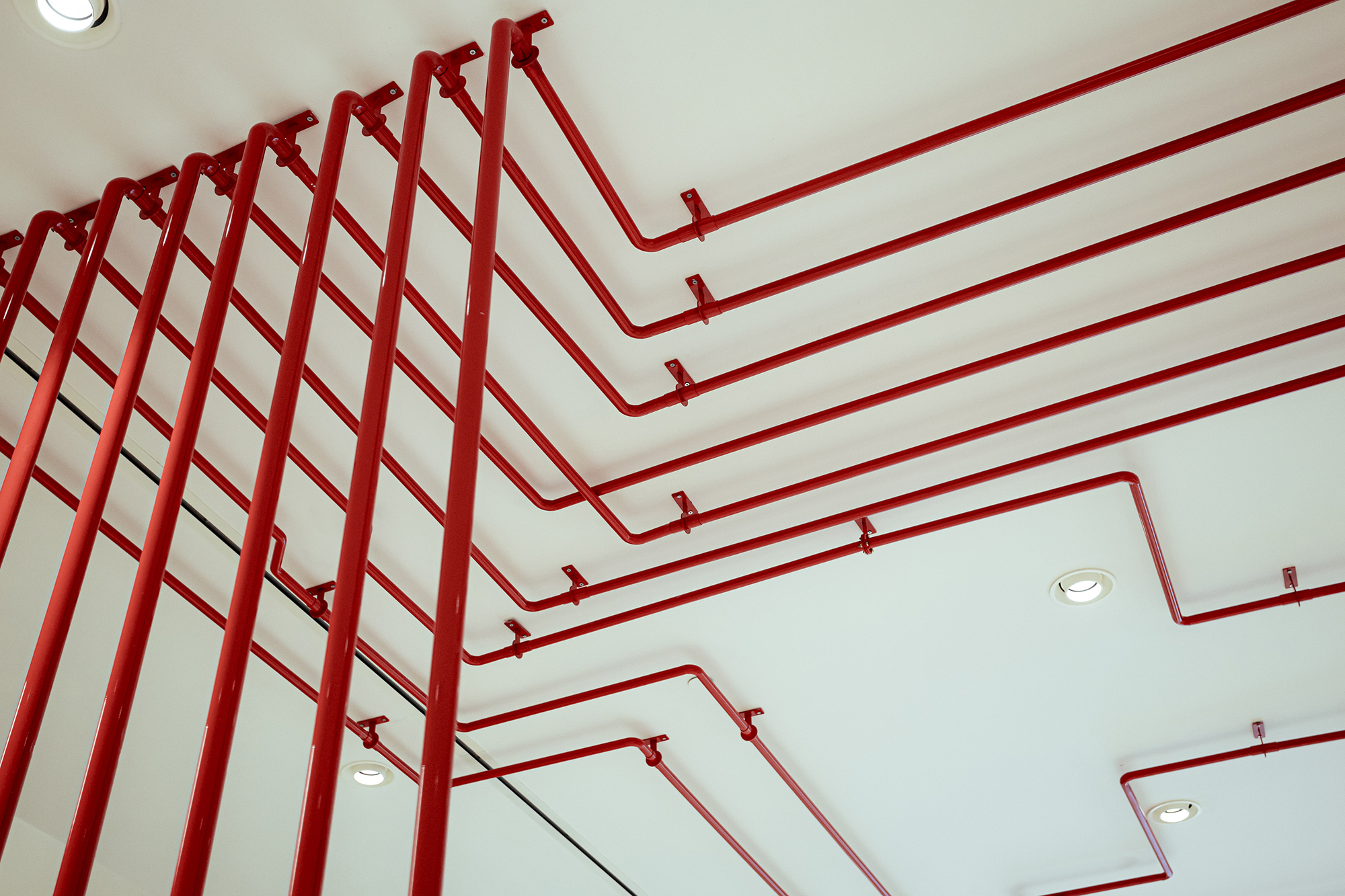
The artwork reflects a broader tradition in contemporary art and architecture where infrastructural elements—such as pipes, conduits, and mechanical systems—are intentionally exposed rather than concealed. Emerging prominently in late 20th-century architectural movements, this approach challenged conventional ideas of finish and decoration, revealing the “anatomy” of buildings as part of their aesthetic language. By abstracting these systems from their purely utilitarian role, artists and designers began to treat them as compositional tools, capable of shaping experience, rhythm, and perception within interior spaces.
Cultural/Artistic Inspiration
Culturally, the installation resonates with themes of connection, flow, and continuity. The red pipes can be interpreted as symbolic pathways—channels of energy, movement, or communication—linking different planes of the space. Their descent to the floor suggests grounding and stability, while the overhead network evokes complexity and motion. Artistically, the work draws from minimalist and conceptual practices, where repetition, line, and color are used to redefine spatial awareness. The contrast between apparent randomness and strict vertical order invites viewers to reflect on the balance between chaos and structure in both built environments and everyday systems.