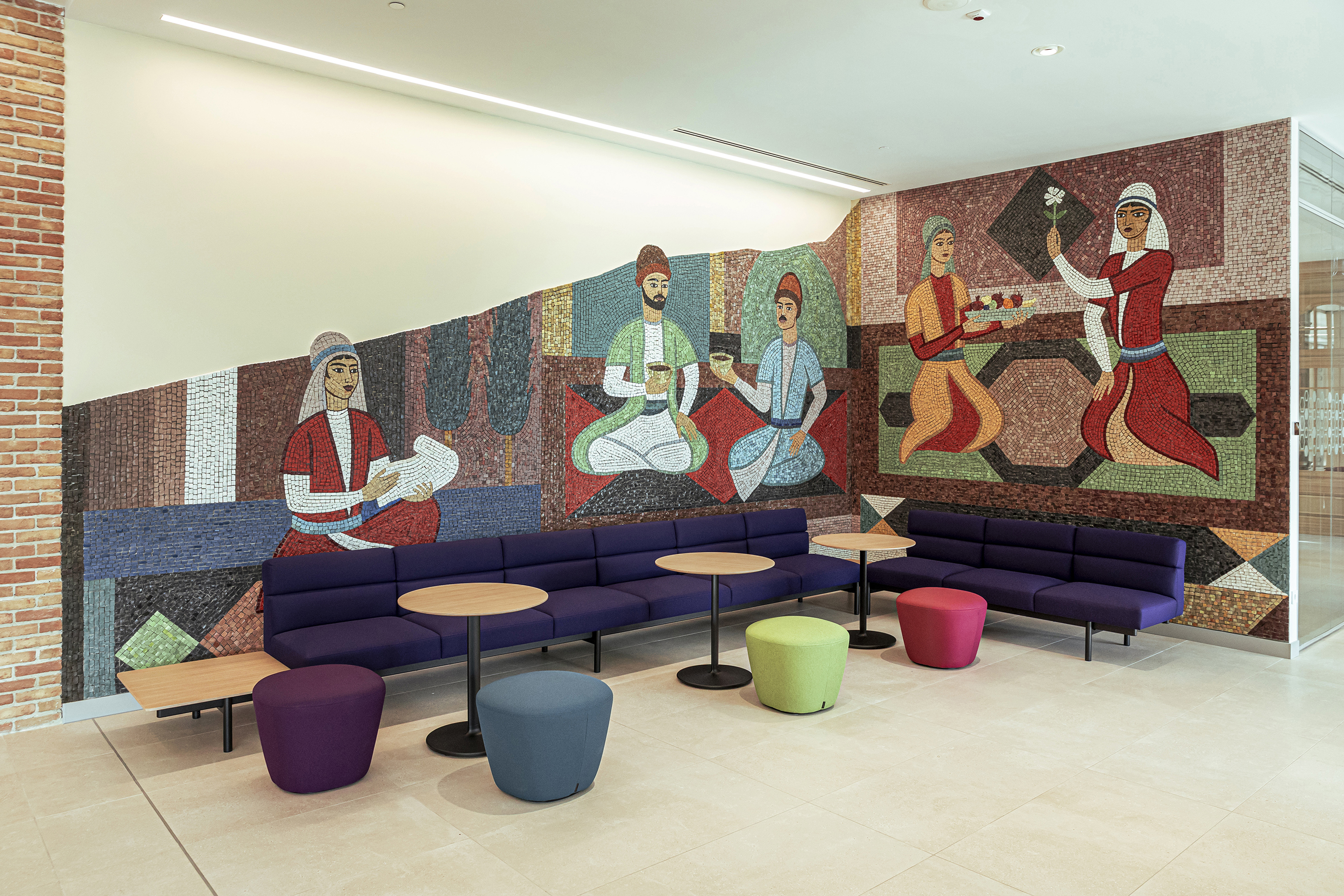
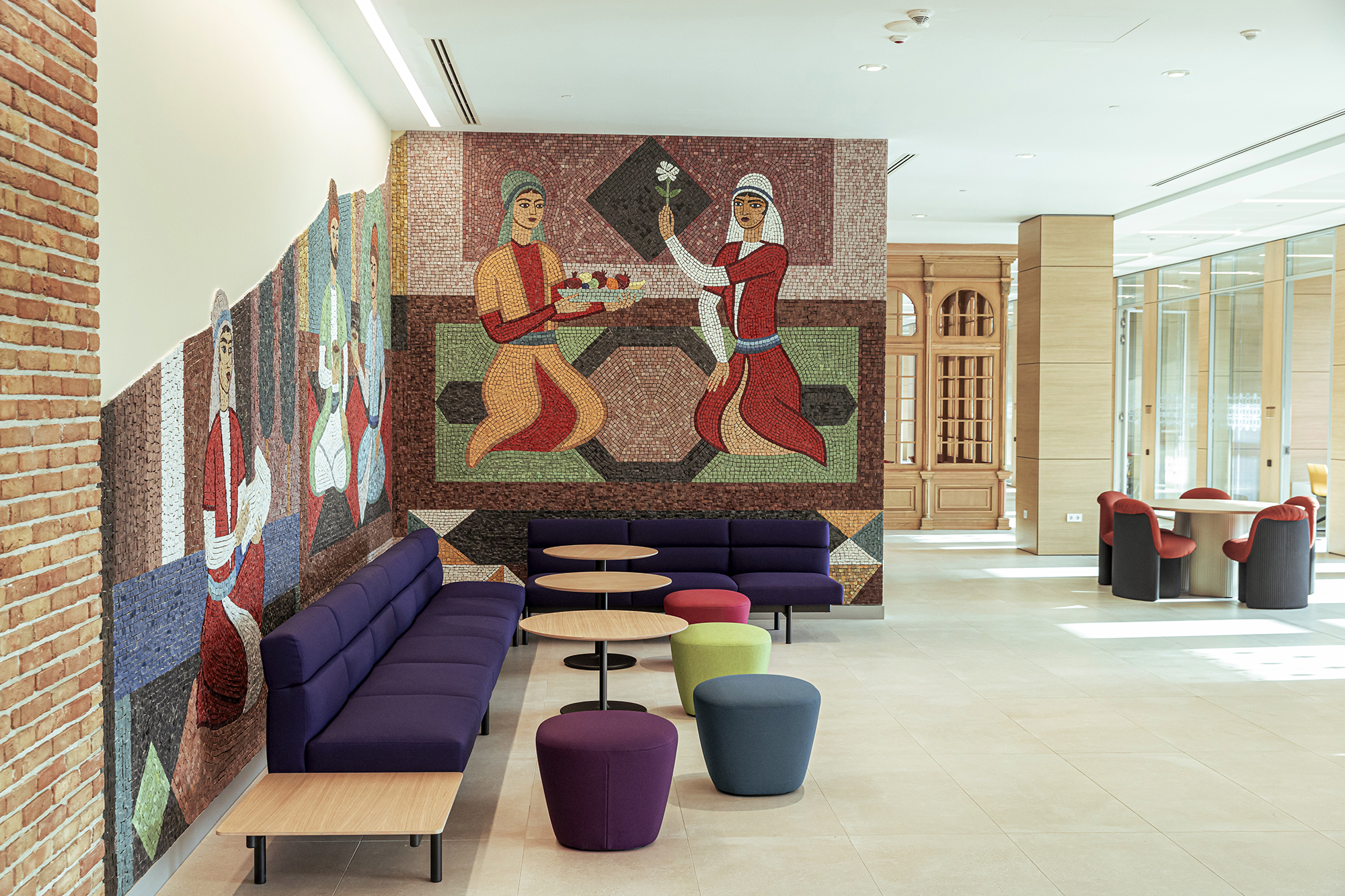
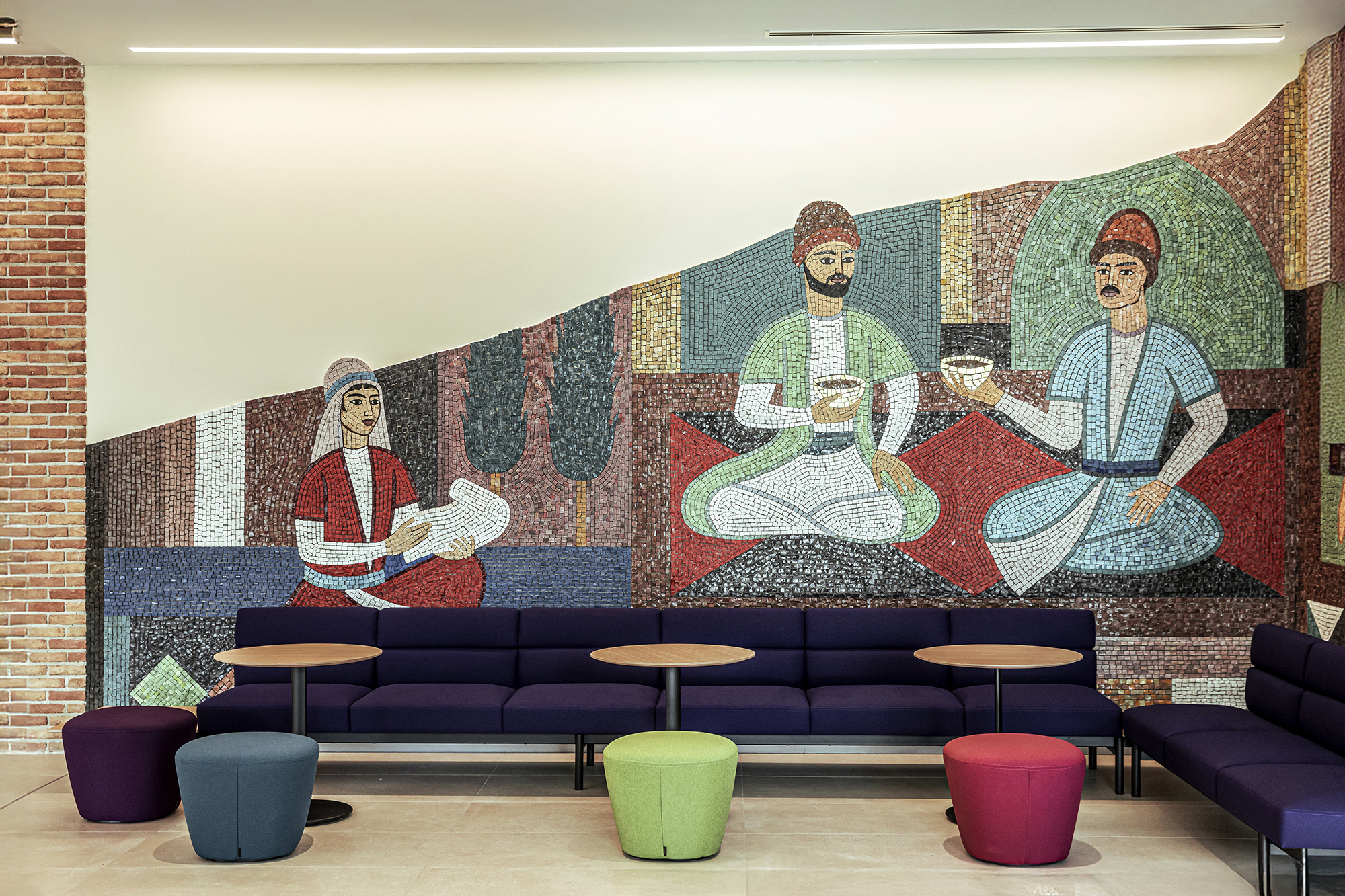
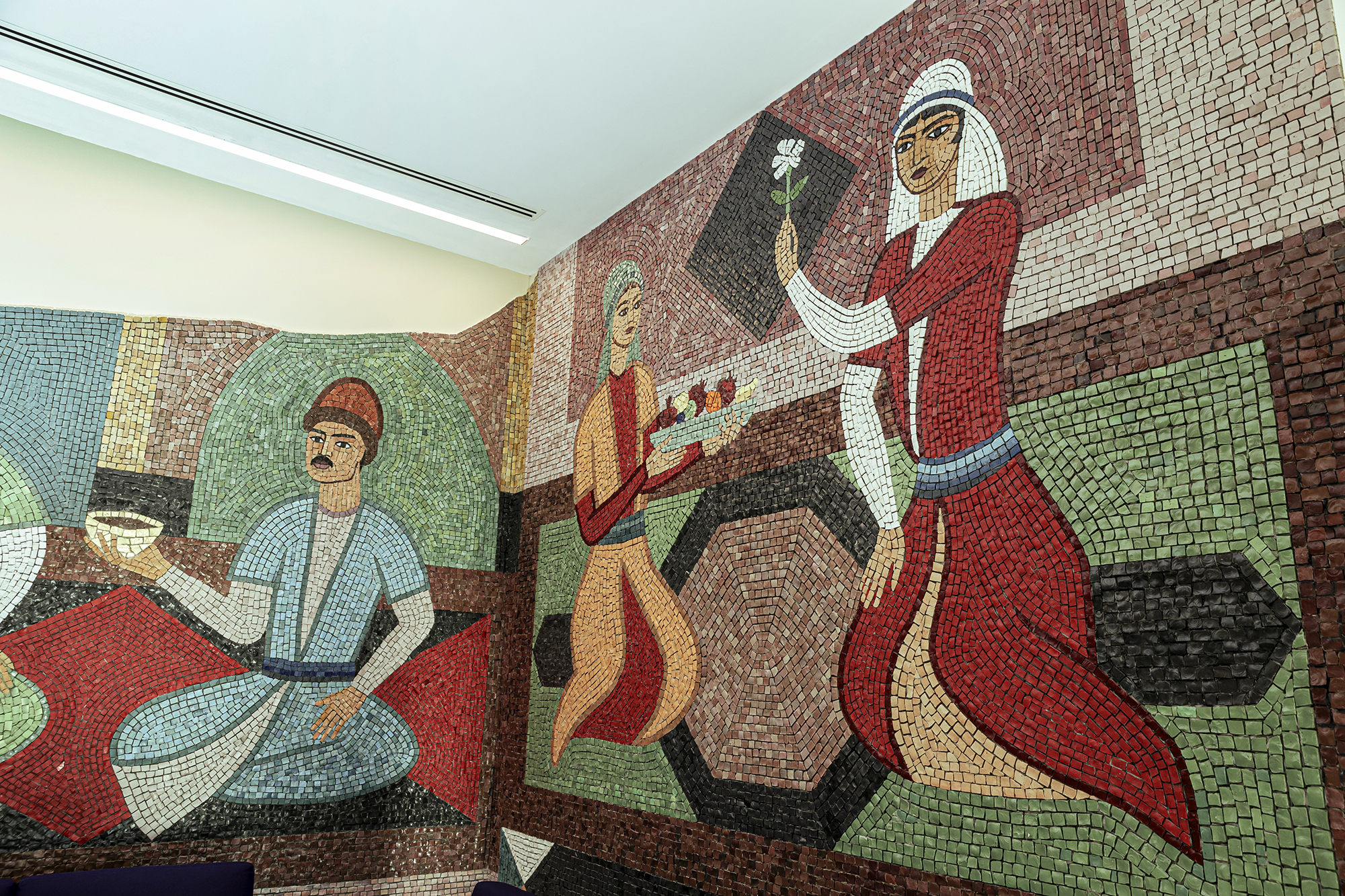
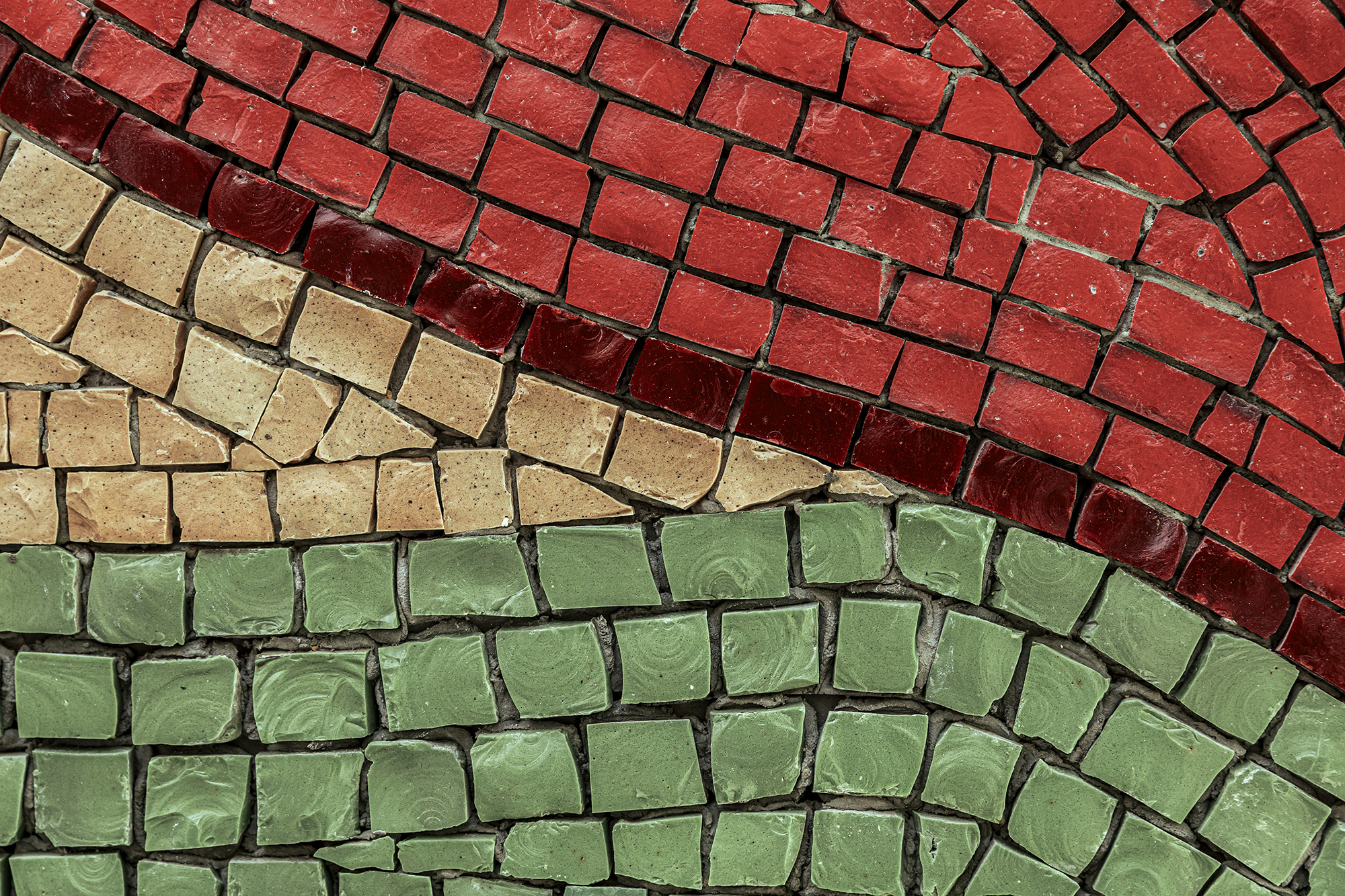
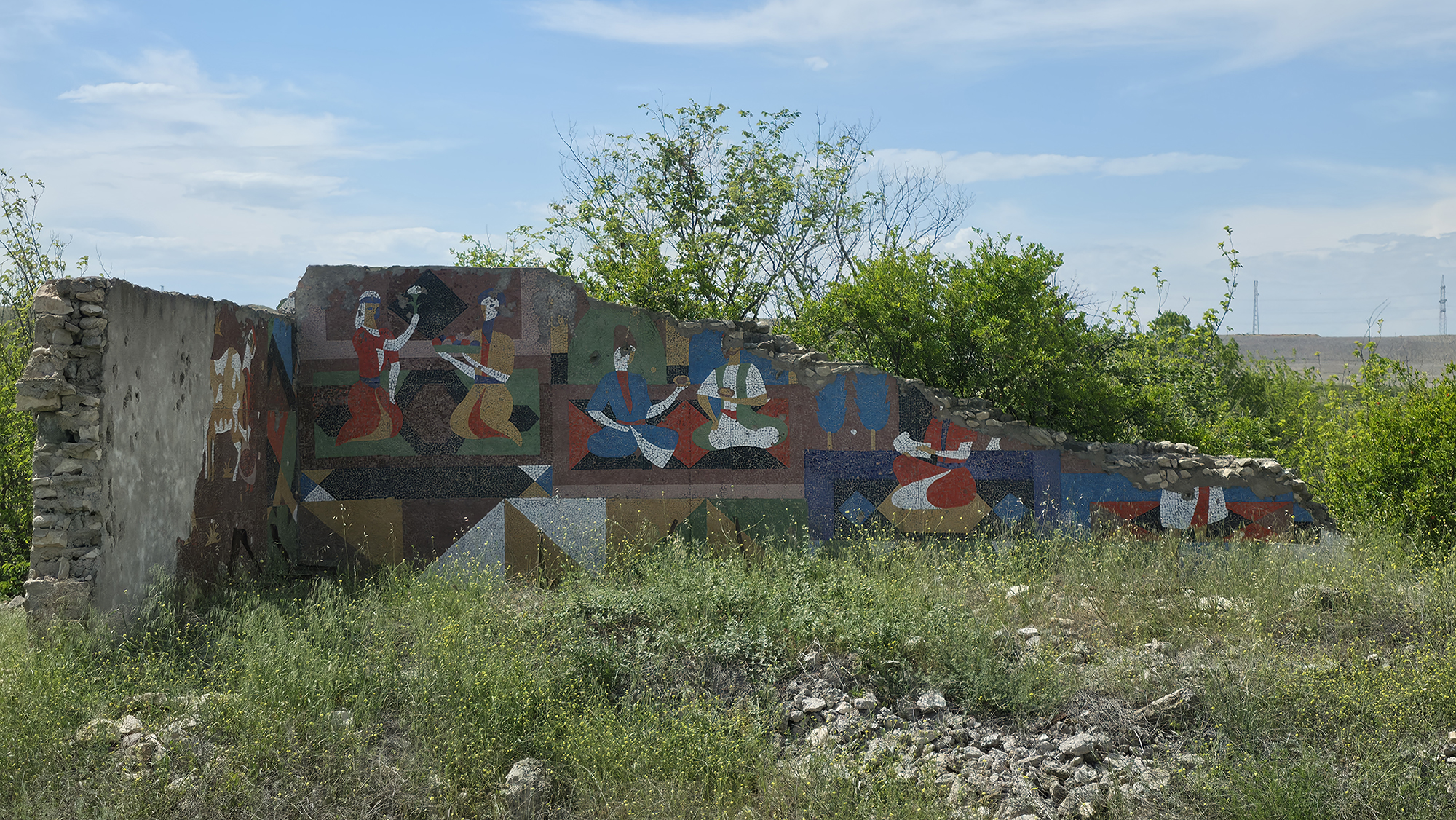
Jabrayil bus station
Historical Context
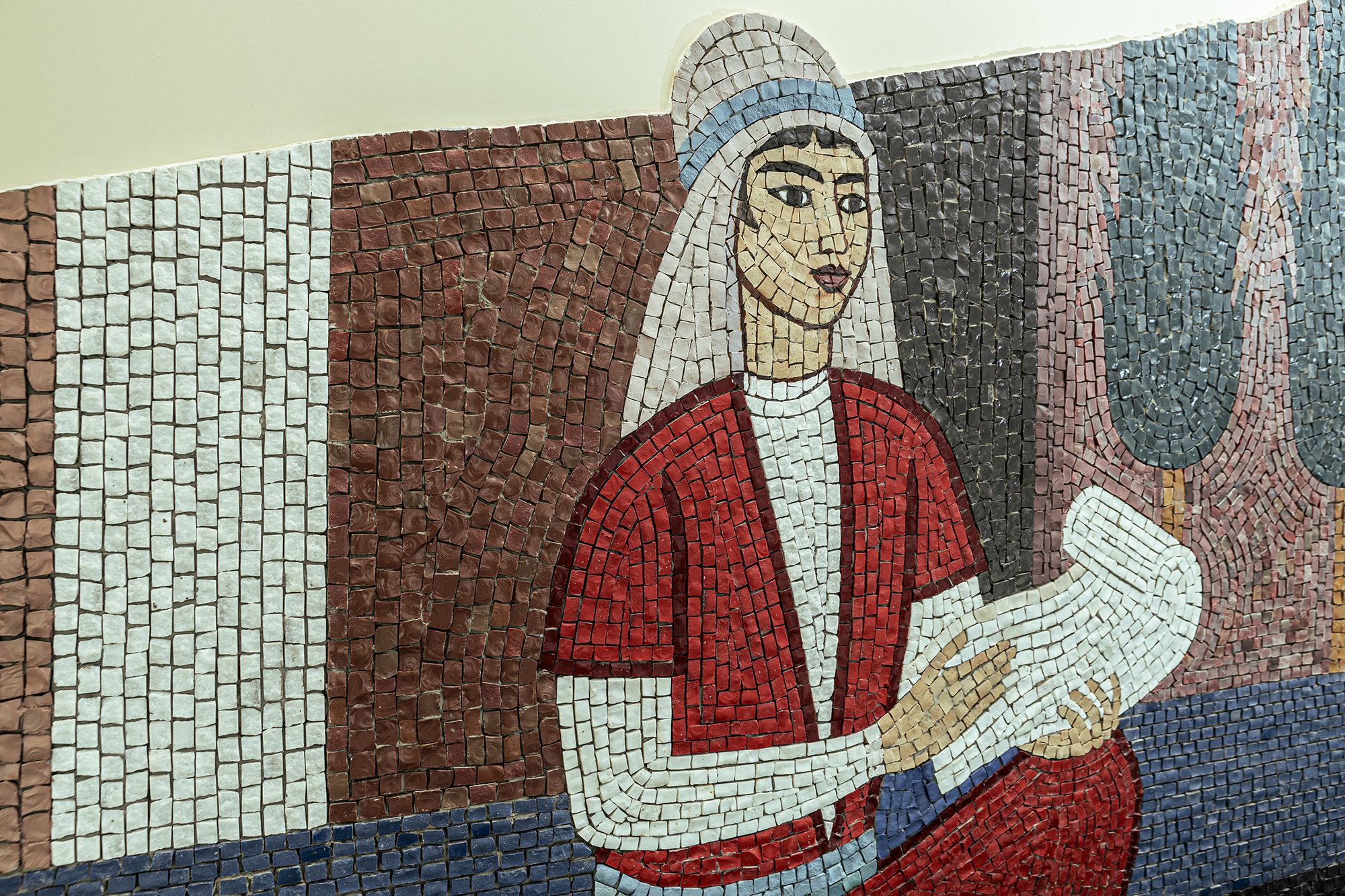
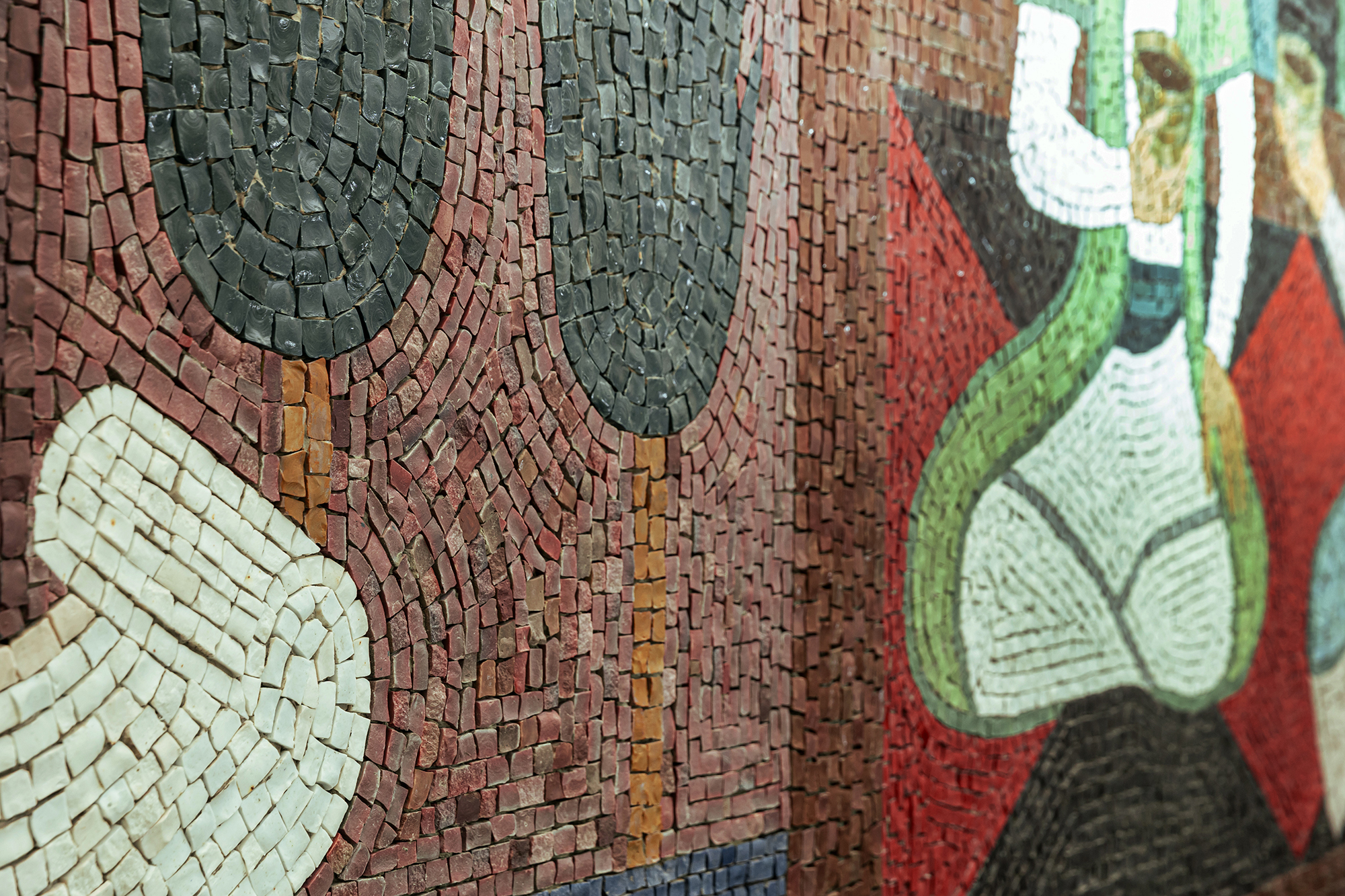
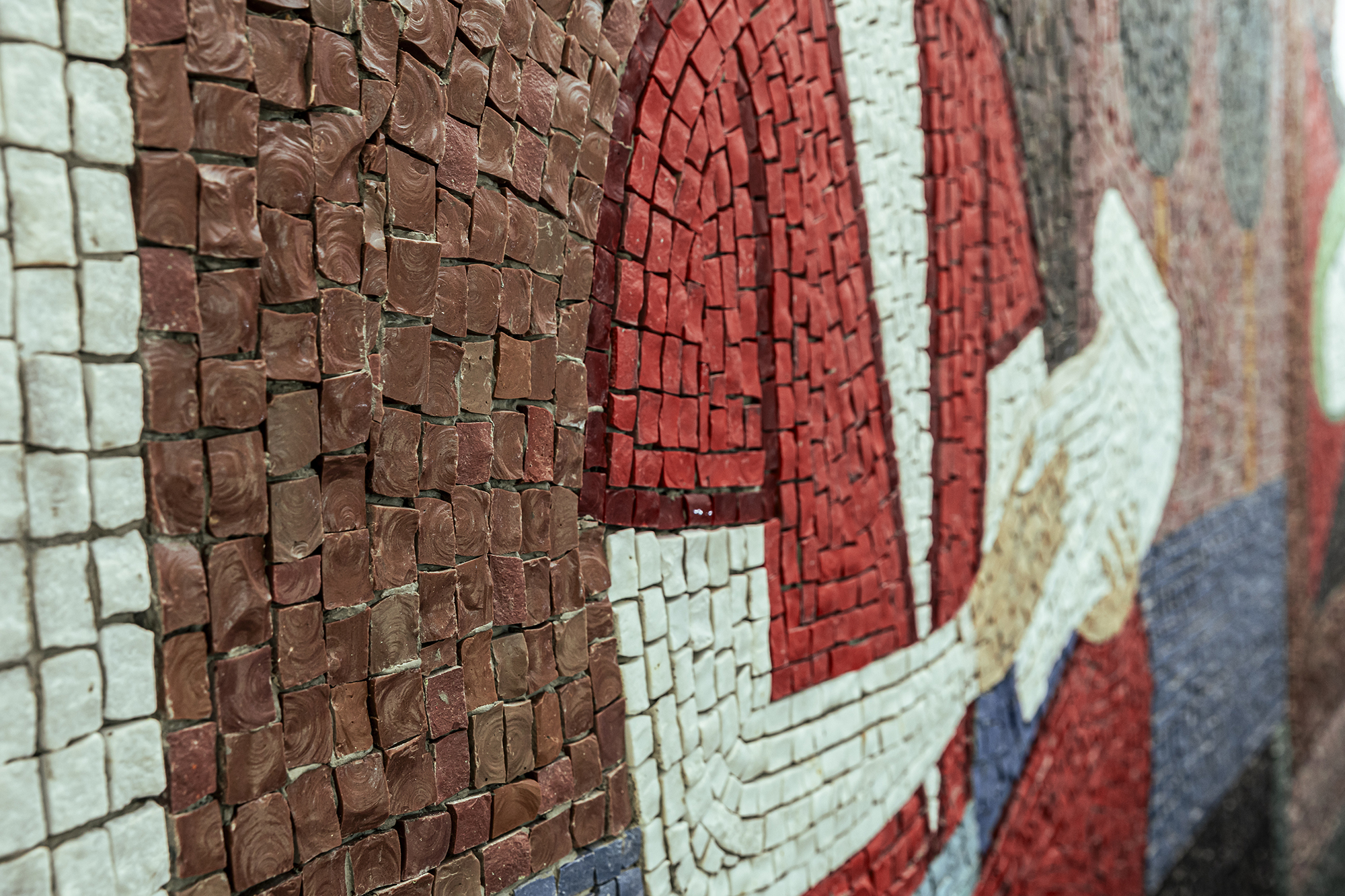
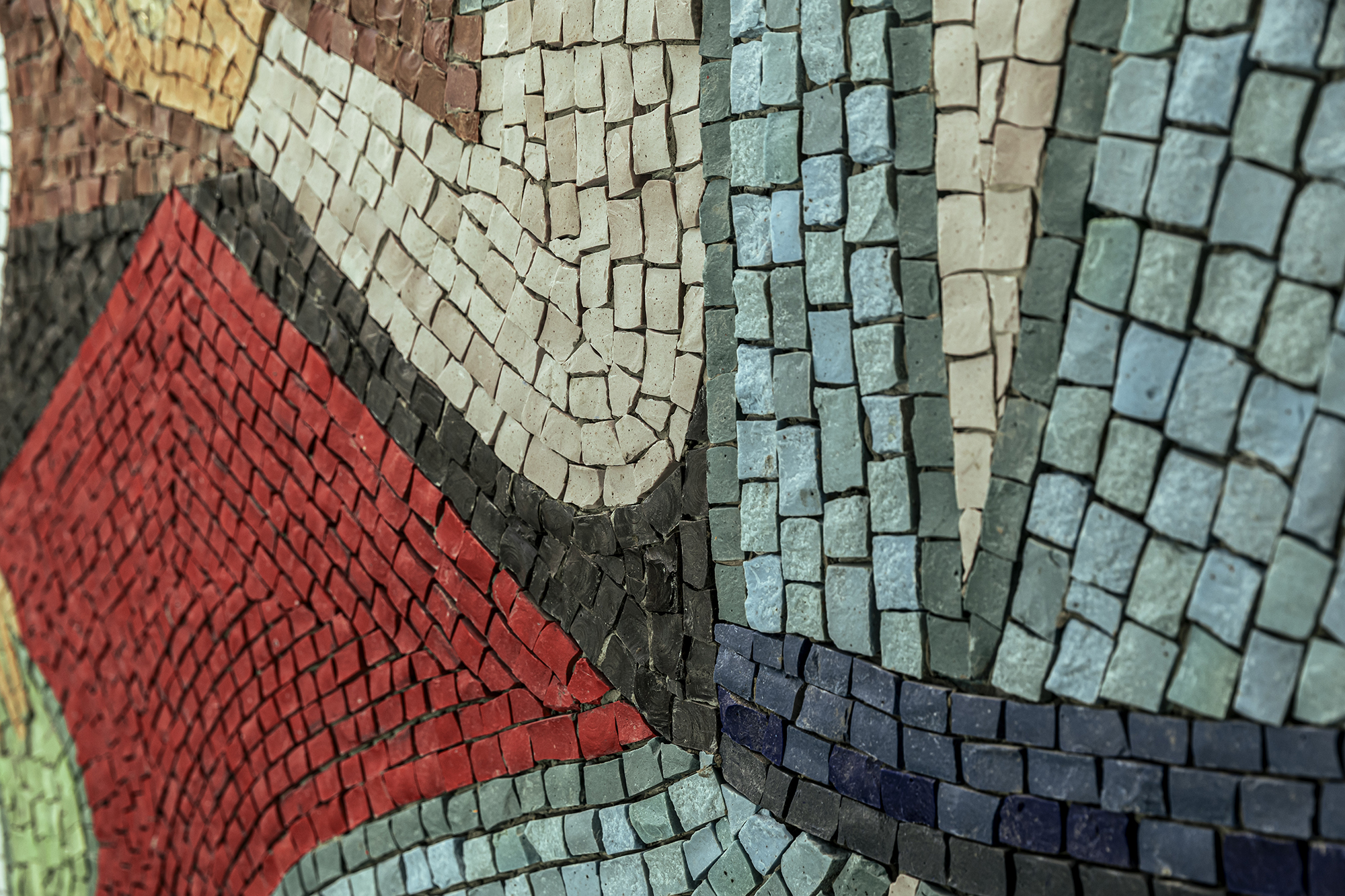
his mosaic originates from a Soviet-era public bus stop in the Jabrayil district, located within the historical and cultural region of Karabakh, Azerbaijan. Produced in the late 20th century, it represents a form of monumental-decorative art widely commissioned during the Soviet period, when public infrastructure was often adorned with artworks that combined socialist themes with elements of local folklore, music, and rural life. Following the occupation of Jabrayil in 1993 during the First Karabakh War, the region was left uninhabited for nearly 30 years. Most cultural and architectural heritage was destroyed or deteriorated. Remarkably, this mosaic survived in the ruins — a rare visual remnant of the district’s pre-war identity. After the district’s liberation in 2020, the mosaic was documented and recognized as a significant example of Azerbaijan’s mid-century public art tradition. Its recreation here at ADA University serves not only as a design element, but as an act of cultural preservation — a tribute to the resilience of memory and the enduring spirit of Karabakh.
Cultural/Artistic Inspiration
This artwork once adorned the wall of a public bus stop in the Jabrayil region, making it a rare and powerful example of how art was integrated into everyday life during the Soviet period in Azerbaijan. More than a decorative surface, it was a vibrant expression of local culture — placed in a public setting where thousands passed by, waited, or took shelter, unknowingly interacting with a piece of cultural storytelling. By bringing this mosaic into the university space, we hope to preserve not only a visual form but also the emotional and historical layers behind it. We remind our community that true culture is not hidden in museums; it lives in our streets, walls, and memories. This corner preserves not only an artistic form but the collective spirit of a region that has survived conflict, silence, and time. It is a gesture of respect, revival, and remembrance — and a powerful lesson in how art makes even a bus stop unforgettable.
Author
Artist, Amirkhan Mammadaliyev
Original Location
39.398842302616906, 47.02366712217784
Special Appreciation
We thank the cultural field researchers and local historians who documented this mosaic in post-liberation missions, and to those who supported the creative reinterpretation of the work at ADA University.